
This post may contain affiliate links. Please see our disclosure policy.
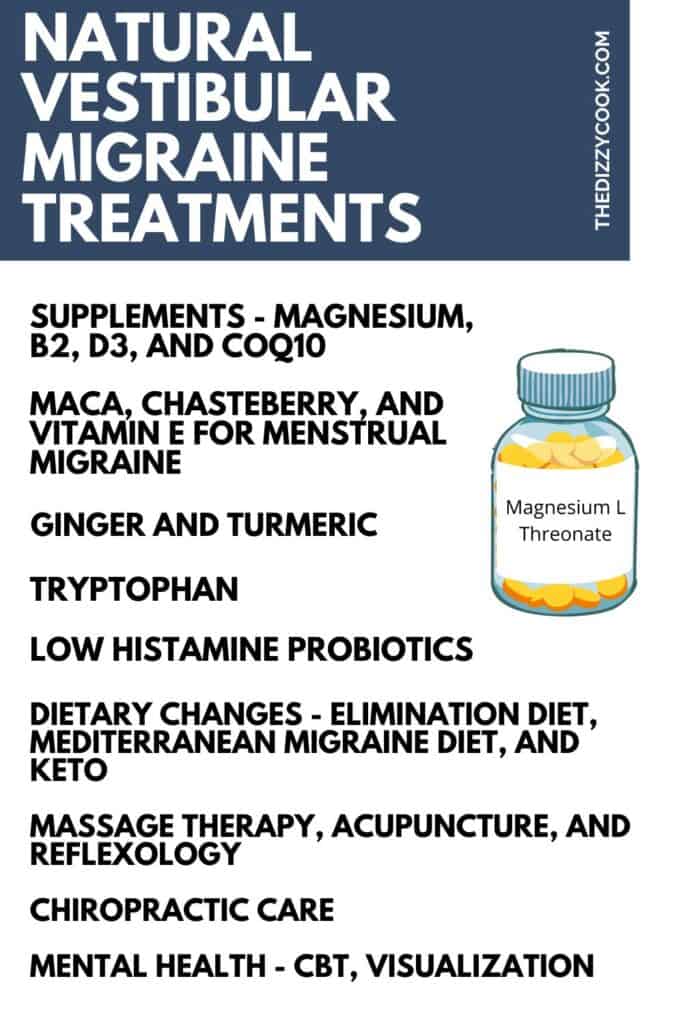
Natural treatments for vestibular migraine can help bring down the severity of vertigo, dizziness, and light sensitivity. Often they work best when accompanied by medications, but for some people, the natural treatments are enough.
These are a few migraine prevention vitamins and treatments that have helped me over the years. A lot of these natural remedies for migraine associated vertigo and other vestibular migraine symptoms have been a part of my vestibular migraine story, even if I don’t currently take some of them. This post is always changing depending on new treatments I’m discovering and testing myself.
Please always consult your doctor before taking any supplement. This is not meant to be a substitute for medical advice.
Table of Contents
- Vestibular Migraine Supplements
- Advantages of Individual Supplements
- Magnesium for Migraine Relief
- Riboflavin for Migraine Prevention
- CoQ10 and Ubiquinol
- Supplements for Menstrual Migraine
- Vitamin D Deficiency and Migraine
- Ginger and Turmeric for Pain
- Tryptophan for Anxiety and Sleep
- Probiotics for Migraine
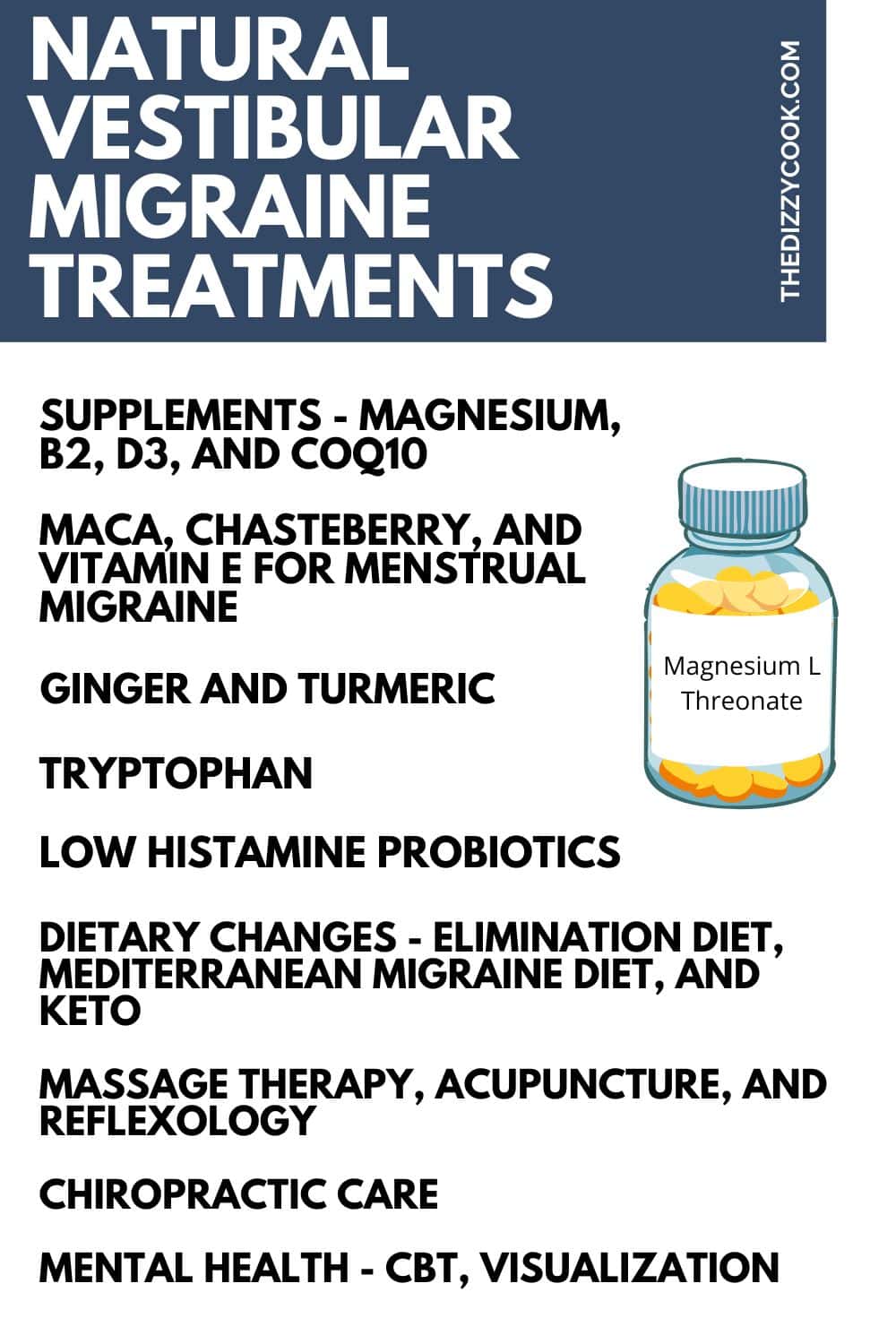
- Other Natural Treatments for Vestibular Migraine
- Multivitamins and Prenatal Vitamins
Vestibular Migraine Supplements
When I originally wrote this post at the beginning of creating The Dizzy Cook almost 5 years ago, I was at the edge of wanting to start a family. The thought of having a baby when you’re dealing with chronic migraine can be overwhelming, but I also didn’t want to give up on that dream.
Because I knew it would be difficult to start a medication I might have to wean off of quickly due to pregnancy, I pressed my neurologist to focus on a vestibular migraine treatment plan that would have a focus on things I could continue during pregnancy and postpartum.
If you’re also trying to get pregnant, the plan can depend on the severity of your migraine attacks. You should discuss with your OB-GYN the risks of medicating while pregnant. Mine was very open about the risk, but for some of her patients that experience life-threatening conditions like seizures, it’s important for their own health to continue medication.
For me, the best option was to only use acute treatments at certain times, but to rely heavily on natural remedies for vestibular migraine.
I’ve been incredibly lucky that I’ve done well without using a lot of medication for the majority of my vestibular migraine treatment (outside of my preventative timolol malate eye drops). Even the weaning process off medication wasn’t horrible, although I did experience some pretty significant side effects from coming off of birth control.
It was tough for a month or two, but eventually evened out back to a good baseline. I really buckled down on the supplements below and the HYH diet during that time.
Advantages of Individual Supplements
I used to take combination supplements like Migrelief, but quickly found that they didn’t work best for me. A lot of brands now input feverfew and butterbur which I do not want to take. Feverfew actually gives me head pain.
Some doctors also say it’s best to take supplements separately as combination supplements can have more fillers and less expensive ingredients. With individual supplements you can add and take away to actually see what’s helping. There’s no point in just taking supplements if they’re not actually helping…you’ll just end up with expensive pee.
If you just can’t get behind the cost and effort of individual supplements, the combo supplement I would recommend is TruTyna MVI by Dr. Shin Beh.
It contains a great combination of the vitamins we’ll discuss below, including the full amount recommended for riboflavin, and allows for additional magnesium supplementation on your own. It also does not contain feverfew or butterbur.
Magnesium for Migraine Relief
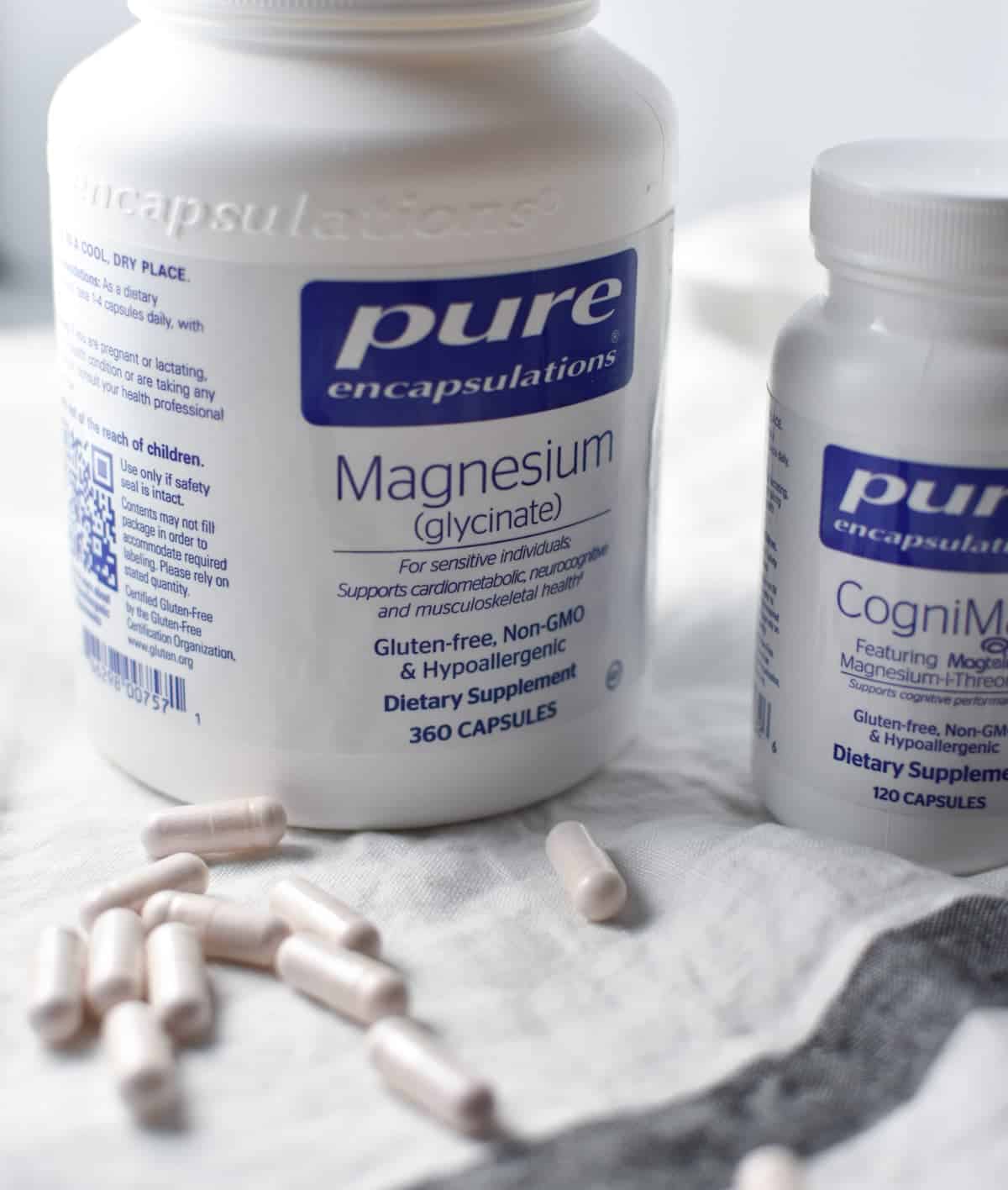
There are a few other magnesium types that are great for magnesium deficiency and chronic illness. Malate is said to be good for people with fibromyalgia or CFS. For people taking high doses, magnesium glycinate is really great since it is bonded to the amino acid glycine as opposed to citrate which is bonded to citric acid.
Glycine itself supports digestive and mental health, as well as having natural relaxing properties. This makes it an optimum form of magnesium for those with migraines or neurological issues. This is a great natural solution for vertigo. I find Metagenics makes me a little more sleepy, but more relaxed than Pure Encapsulations. Because of this, I like to take it at night before bed.
Another good option is magnesium threonate, which studies have shown is good for mental clarity, memory, and overall brain health. This one can be a lot more expensive and difficult to find. Pure Encapsulations makes one called CogniMag. I have ordered the 3 below and found all have great results. CogniMag has been a staple for me for years now and it has helped SO much with brain fog. I think the berry blend they add to it is the key as I’ve tried other brands with not as much success.
Many brands, like the popular Calm drink, contain magnesium citrate or magnesium oxide. If you’ve ever taken magnesium and had an upset stomach after, chances are you’re taking the citrate or oxide version. It has a laxative effect on many people.
Taking high amounts of magnesium, like the levels needed for migraine treatment, can sometimes cause gastrointestinal distress. This is why glycinate and threonate are often recommended as they typically don’t cause this issue (but sometimes they do for certain people!).
Where to order:
For US residents, take advantage of my supplement store which gives you an amazing discount on all the brands below. You can also order these on amazon at full price.
- Magnesium Threonate – CogniMag by Pure Encapsulations
- Magnesium Glycinate by Pure Encapsulations
- Metagenics Magnesium Glycinate
- UK ONLY Magnesium Glycinate by Pure Encapsulations
Because your body can only absorb so much magnesium orally, I like to supplement with topical treatments like magnesium chloride salts and spray or lotion. My favorite brand is Ancient Minerals and if you browse their products they have a few that are for sensitive skin. Sometimes magnesium applied topically can cause itching and redness.
Riboflavin for Migraine Prevention
Vitamin B2 – My neurologist told me this is one of the best vitamins you can take for migraine prevention and has been scientifically proven that it works. There’s even a study on it preventing migraine for children. Like magnesium, people with chronic migraine may be B2 deficient.
What’s really interesting to me is B2 deficiency has side effects of digestive problems. I had struggled with digestive problems before my migraine attacks began, which I attributed to stress, but any issues I had have since cleared after starting the supplements and diet.
Studies have shown that Riboflavin can cut the number of headache days, as well as reduce the length and severity of migraine. It’s also relatively low cost and has minimal risk of side effects.
The only downside is it’s tough to find a capsule without gelatin in it, and some of the foods it’s found in can be migraine triggers like soy, almonds, and yogurt! 400mg a day is recommended for migraine patients based on studies. The below brands are gelatin free and are not a part of a “b complex”.
Recommendations:
- Bluebonnet B2
- Seeking Health Riboflavin – 400mg (discounted) – If you don’t want to take 4 pills, these capsules contain 400mg and are gelatin free. I personally used to take these.
- UK ONLY Solgar B2 Riboflavin
CoQ10 and Ubiquinol
CoQ10 helps the cells in your body produce energy, and is an antioxidant as well. Your body produces it naturally, but it can also be depleted by certain medications or just be low in general. Studies have shown it can reduce the frequency of migraines.
It’s great for those who struggle with the brain fog, memory problems, and mental clarity that comes from migraine attacks. This supplement has a few more side effects to worry about, like dizziness and rashes.
I began my migraine journey with CoQ10 in 300mg, but switched to Ubiquinol under the advice of my Reproductive Endocrinologist when I began fertility treatments. This is strictly from the perspective that it helps with egg quality, however, I found it also helped my vestibular migraine attacks more than CoQ10 did. So if you’re not finding success with regular CoQ10, definitely give Ubiquinol a try.
Below are some recommendations for CoQ10:
- NOW CoQ10 Veggie Capsules
- CoQ10 from Pure Encapsulations (discount)
- UK ONLY Doctors Best Veggie Capsules
For Ubiquinol, I struggled to find a brand without gelatin. Restorative Formulations is the best bet for ingredients and price. Pure Encapsulations is also an option, but just so expensive.
Supplements for Menstrual Migraine
Maca Powder
While on the topic of brain fog and mental clarity, maca has been a huge help for me during a period of time with vestibular migraine. It’s is a root vegetable from Peru that’s abundant in several vitamins and minerals which support the endocrine system.
While it’s mainly known for its ability to help balance hormones and improve sexual dysfunction, its energizing properties can also help with memory recall.
As I was transitioning off birth control and my hormones were trying to regulate, I put about 1/2 tsp of powder in my smoothie every morning. It really helped my hormonal migraines clear in about 2 weeks. The fact that it promotes fertility is a nice bonus!
Maca can be tough to digest, especially if you’re not used to it. I suggest keeping doses low at less than 1 teaspoon, or trying gelatinized maca which is supposed to be more gentle on the stomach. Gelatinized refers to the process and does not mean that it contains “gelatin” that’s derived from animals. Try it in a smoothie like this sunbutter maca smoothie.
If maca is interesting to you, you may also want to look into chasteberry as well, which can be helpful with hormone regulation. I personally took the Metagenics chasteberry.
Vitamin E
My neurologist Dr. Shin Beh mentions in Victory Over Vestibular Migraine that 400IU of vitamin E daily the week of your period can be helpful for preventing menstrual migraine attacks. I’ve found this to personally be incredibly helpful as well.
In a study done on 72 women, 400IU vitamin E was given 2 days before the start of the menstrual cycle and 3 days after. After 2 months, patients reported an improvement in photophobia, phonophobia, and nausea, with significant differences in pain severity and functionality.
- Life Extension 400IU (contains gelatin)
- Deva Vegan Vitamin E 400IU (no gelatin)
Vitamin D Deficiency and Migraine
Some who have migraine also have a vitamin D deficiency. It’s not only important for having strong bones, but can also help lower inflammation. This is one you can easily have your doctor check with bloodwork.
- 5000 IU or 2000 IU from Pure Encapsulations (My doctor recommends 5000 IU when my bloodwork reads that I am low).
- UK PE Vitamin D
Ginger and Turmeric for Pain
Ginger and Turmeric – I tried to take ginger supplements as a daily preventative, but my stomach just couldn’t handle it and I got acid reflux about 7 out of 10 times. They also can interact with some medications. What has worked best for me is to get these through food, like these homemade wellness shots, ginger smoothie, homemade ginger ale, or homemade ginger juice.
The most recent Migraine World Summit mentioned turmeric, and curcumin specifically, can be helpful for migraine brain fog.

Ginger Turmeric Tea Recipe – When things got really bad, my husband would make me a migraine fighting ginger turmeric tea. What’s nice is the flavor is more mild than a prepackaged tea and it’s easier on the stomach. You could also try these Ginger Turmeric Shots.
Use a turmeric root about the size of your pinky finger and ginger root half the size of what you used for the turmeric. Microplane both into a steeping container. Steep in hot water for 7-10 minutes. You can strain out the little bits and pieces if you’d like. Add a tiny bit of black pepper, which aids in the absorption of the anti-inflammatory curcumin in turmeric, and a little bit of honey to taste.
Need something cool? Try my anti-inflammatory smoothie recipe which readers say is the best migraine smoothie! It’s been known to bust an attack or bring down pain levels significantly, while being a way to get some food without making you feel more ill.
Tryptophan for Anxiety and Sleep
It’s not uncommon for vestibular migraine to cause anxiety or sleep issues. I struggled with it heavily after the birth of my son. Studies have shown that tryptophan can help with migraine prevention as well as anxiety relief and sleep.
This was a supplement I tried under the advice of my doctor, however, there are some medications it can interfere with. If tryptophan supplements aren’t for you, there are ways to incorporate it into your diet naturally through foods like chicken, turkey, cheese, and oats.
Probiotics for Migraine
There are a few brands you may like depending on what you need. Bio-Kult has a few specifically formulated for migraine patients like Migrea.
If you’re sensitive to histamine, or trying a migraine elimination diet, you have to be careful with which types of bacteria strains you use in your probiotics. Lactobacillus casei has one of the highest levels of histamine and tyramine, as well as Lactobacillus bulgaricus. Both are popular in yogurts and probiotics.
Lactobacillus rhamnosus has been studied as a potential stabilizer for mast cells. Bifidobacterium infantis and Bifidobacterium longum also appear to be helpful in certain studies.
A few options for those looking for a low histamine probiotics is Seeking Health Probiota Histamin X which you can get discounted. I personally take Just Thrive (discount is DIZZYCOOK), which is also low histamine and a spore-based probiotic.
Other Natural Treatments for Vestibular Migraine
If you’re looking for other treatments outside of migraine prevention vitamins, these are a few options you can add in.
Dietary Changes
Obviously this website covers a lot of dietary changes, which was a huge part of my healing journey. The three most commonly recommended diets for vestibular migraine are Keto, Mediterranean, and the Johns Hopkins Migraine Diet.
Which one you choose is entirely up to you and your physician. I started with the elimination diet, which is also know as the John Hopkins Migraine Diet or Heal Your Headache. Since it helped me find my food triggers, I transitioned to the Mediterranean Migraine Diet for long term management.
While elimination has you temporarily avoiding common migraine triggers before reintroduction, which should help to also raise your migraine threshold, the Mediterranean migraine diet is more about foods to include to support brain health. The book uses the omega 3 studies for recipes that support brain health.
Massage Therapy and Chiropractic
I did try out acupuncture for a few weeks, and I can’t say I had overwhelmingly noticeable results. For me, it wasn’t worth the cost to keep up. I noticed a much larger difference by scheduling a massage therapy session at least 1-2 times a month. While it’s expensive, I feel like it’s worth it in my cost/benefit analysis. It relaxes my neck muscles, promotes healing and mental clarity, allows me to fully relax, and is an all-natural treatment. I consider it my “preventative medication”.
My biggest recommendation is to find a massage therapist that you connect with. When looking for one, ask if they see patients with migraine and if they perform reflexology. My massage therapist performs acupressure, reflexology, deep-tissue, and occasionally cupping during my session. She also wraps my head to make it feel more secure and we do various grounding techniques for any increased dizziness.
For chiropractic care, it’s important to do research and go with your gut feeling. A lot of chiropractors will claim they can cure your migraine attacks. Some of my readers have reported success with Atlas Orthogonality. I personally don’t feel safe doing neck adjustments.
Some neurology clinics even have chiropractic care available as an affiliate or on-staff. I saw a larger improvement using regular massage therapy over chiropractic care, but these things can be entirely personal.
Green Light Therapy
- Allay Lamp – This lamp emits a specific wavelength of green light that’s been studied to reduce the severity of migraine attacks and light sensitivity.
- Migraine glasses can help reduce symptoms. Avulux in particular uses green light therapy (discount is THEDIZZYCOOK).
Mental Health
For an acute treatment, there are breathing techniques and affirmations you can use to get through. Telling yourself that you are safe, using visualization, or cognitive behavioral therapy can all be helpful tools. There are many free resources on Youtube, but I recommend finding a therapist who can work with you one on one.
Multivitamins and Prenatal Vitamins
My prenatal vitamin journey has been a doozy. My OB-GYN gave me a few multi-vitamins to test out so I can find one I like that works well with my migraines. Who knew it would be so difficult to find prenatal vitamins without additives?
I switched from Pure Encapsulations PreNatal to MamaBird PreNatal because after going through recurring miscarriage and infertility, genetic testing showed I had the MTHFR gene. This means you cannot absorb folic acid properly, and need folate or methylfolate versions. I switched from MamaBird to Ritual when MamaBird changed the formula that was working for me. Ritual gave me awful fishy burps.
With George, I settled on Seeking Health Prenatal and the only thing I hated about it is it’s 6 pills a day! When I was pregnant with Lila, I went with Thorne Prenatal and was very happy with it.
For a general multivitamin, I recommend Pure Encapsulations ONE. A lot of followers do well with it.
Let me know if you have other natural treatments that have worked well for you!
This post was updated on August 6, 2020 with new information on brands I currently love. It was updated again in October 2021 to reflect new additions to supplements like tryptophan. Please note some of the links above are affiliate links, but they are also everything I actually use daily (except for some of the UK only brands).






Hi Alicia,
Thank you for all you’re doing for the migraine sufferers community. I bought your cookbook and it’s amazing. The list of allowable foods is so incredibly helpful and my migraine regularity has decreased significantly based on my diet. My most recent issue is that, at 53 years old, I find my hair is thinning significantly. I’d like to start taking hair growth nutritional supplements- all natural, migraine safe and hopefully vegan and cruelty free. Do you have any recommendations? Thanks so much!
Hi Danielle, I’m sorry, I think your primary care doctor might know more. All I know of is biotin.
Thanks for getting back to me! 🙂 I just discovered your supplement store. Very exciting. xx
Hair loss is a symptom of some migraine medications. My hairdresser reckons that stopping the medication has shown great results on her other customers – it’s not permanent. Stopping has hugely reduced hair loss for me.
Thank you, I suspect that might be the case! 🙂
Hi Alicia,
I was diagnosed with Meniere’s disease in late spring, early June. My ENT sent me to a neurotologist, who confirmed that diagnosis but also suspected that I might have migraines (though I don’t get horrible headaches), and recommended I see a neurologist. I just had that appointment on Friday. As a result of that examination, he agrees with the possibility of migraines, and in addition to scheduling more tests, he recommended supplements, drugs and the migraine diet.
It was during my research today that I discovered your website. Your site is a partial answer to the complaint I expressed to my husband after reading the list of foods to eliminate from my diet – that it would be more helpful if they told me what I COULD eat.
I still have a lot to figure out, as sodium must be extremely limited for Meniere’s, and I keep kosher, but your pantry lists, shopping resources, recipes, and information on supplements will be extremely useful and save me from starting from scratch.
I do have one question to add to my thanks: how do you manage your diet while traveling? Do you eat in restaurants?
Thank you so much for sharing your experience and knowledge with the public. I hope you continue to feel well and improve. Congratulations and enjoy your baby!
Sincerely,
Adele
Hey!! Yes, adding Meniere’s can be challenging but I do have a lot of MD patients who love the recipes and the cookbook! A lot of it can be catered to you just by making your own broth (I have recipes on here and in the cookbook). That way you can control a lot of the sodium in sauces. Plus fresh cheeses are lower on sodium too!
As for eating out, it’s tricky. I have a post here on suggestions for eating out on a migraine diet. Typically on vacation our stress levels are a lot lower so you can get away with more and don’t have to worry about it as much. I try to make the best choices I can, but just enjoy myself too. If you’re traveling a lot though, you may want to look into meals that are more portable. Like for long flights especially I’ll make my own food before I go. Either a vegetable or chicken sandwich, chips, and an apple or a quinoa salad that doesn’t need refrigeration. I have some travel tips here too!
I truly love all you do for the VM community! Thank you 🙂 My question is – are you able to take Magnesium L-Threonate and pure magnesium, at the same time?
I take 3 different types!! Just run the max amount by your doctor but mixing and matching should be fine as long as they’re approved magnesium in general for you!
Hi Alicia, thanks so much for your last reply. This site has been extremely helpful to me and I plan on mentioning it to my neurologist during my next visit so he can recommend it to other patients.
One more question, I’ve been prescribed to Amitriptyline to see if it helps the migraines but I feel like a fiber supplement may help to balance the side effects. Do you have any recommendations? Thanks again in advance.
I don’t! I usually just add chia or flaxseed to smoothies or oatmeal in the mornings. I hope you can find one you like!
A note on Chiropractic. I have just started with an Atlas Orthogonal chiropractor recommended by both my Internal Medicine and Neurologist. Atlas is a type of chiropractic care that does not use manual adjustment. It uses a machine that uses vibration to make precise movements of the upper cervical area. You don’t really feel much actual movement. I did feel a wave of relaxation of my spine my first treatment. I was already in the midst of an attack when I went for my second treatment so it didn’t seem to make a difference. Going for my third treatment this week. I do know a friend whose daughter had wonderful success with it. If there isn’t an Atlas Orthogonal in your area NUCCA is a similar type of chiropractic treatment.
I see that the Vit D3 that you recommend is just that, but so many say to take Vit D3 with K2. What are your thoughts?
Most neurologists just mention taking D3 as what is most important for migraine specifically. I imagine if you want a supplement with both, you could just run it by your neuro and they’d probably be ok with it. 🙂
I’m using a Calcium supplement as well. Do you think this is alright? I ask because the list of ingredients is quite long, some of which I can’t even pronounce. Although I don’t see any directly from the Glutamate/MSG Avoid List.
https://tinyurl.com/Citracal-Calcium
It’s ok but fewer ingredients would be ideal.