
This post may contain affiliate links. Please see our disclosure policy.
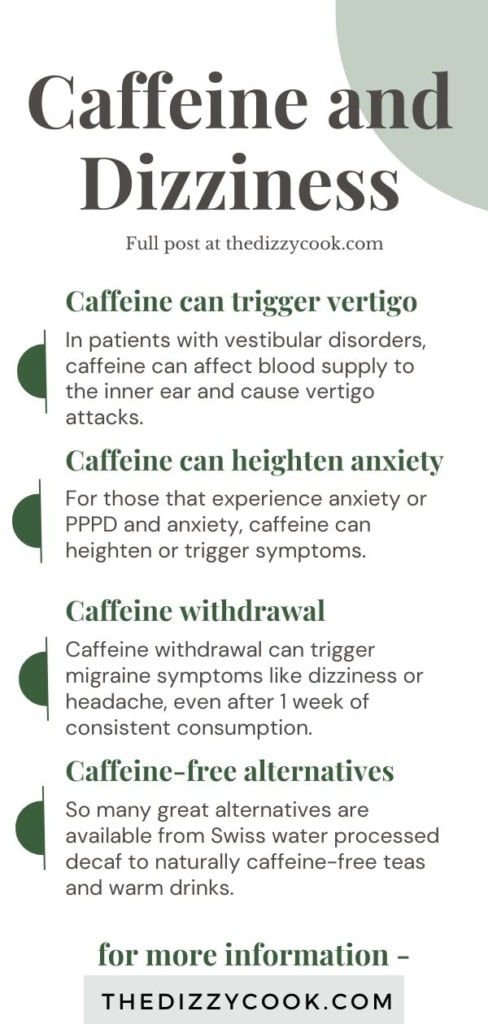
Does coffee ever give you a migraine attack? Or do you get dizziness or vertigo after drinking caffeine?
This post goes into details on how caffeine affects our vestibular system, why caffeine should be limited or completely avoided on a migraine diet, and which types of decaf coffee make a great substitute.
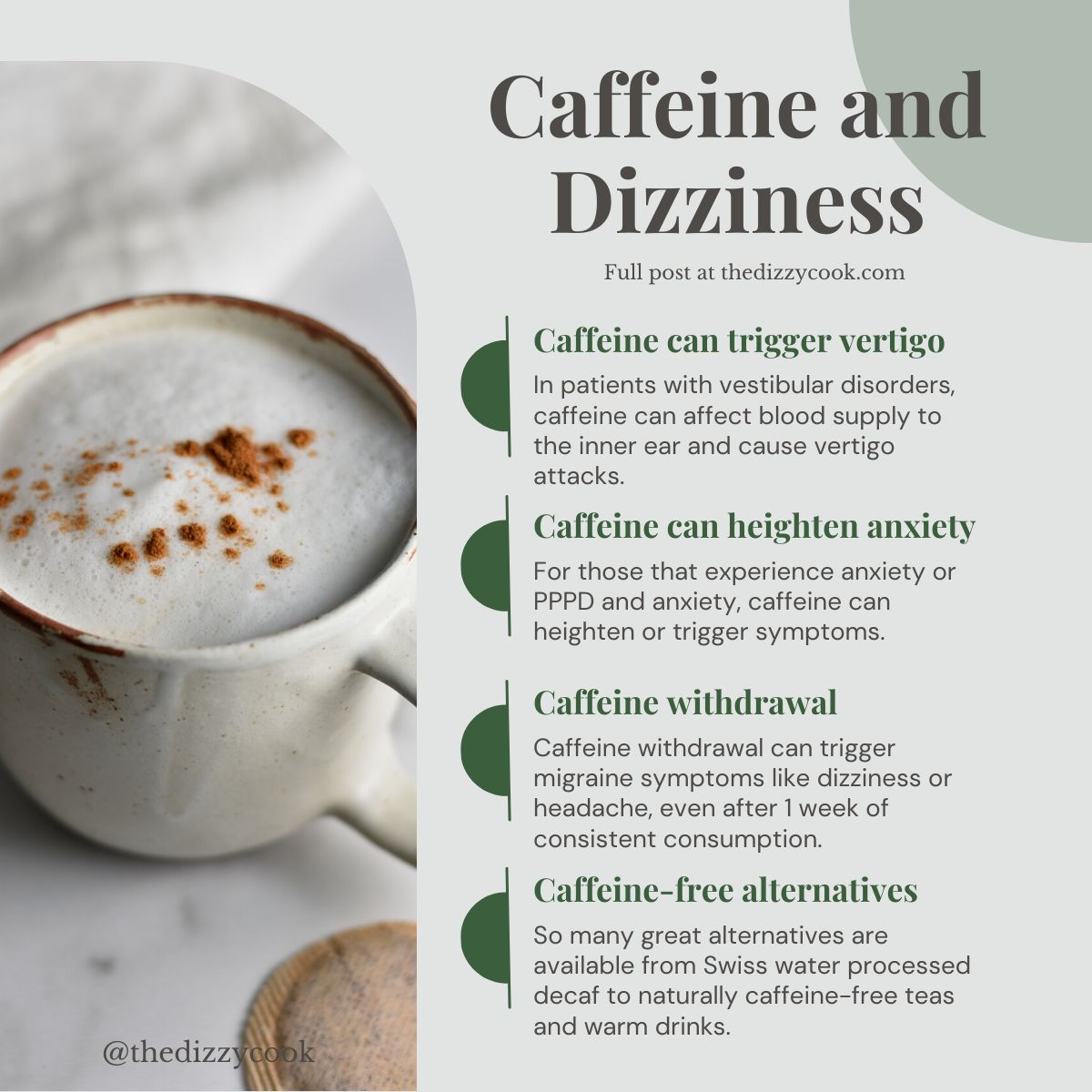
If you get migraine symptoms from coffee, especially dizziness or vertigo with vestibular migraine or other types of vestibular disorders, here are some tips for how to pick the best caffeine-free coffee alternative you can still enjoy.
As someone who is extremely sensitive to caffeine, here is what I’ve learned through trial and error, as well as taste testing a bunch of different brands!
Table of Contents
- Vestibular Migraine and Coffee
- Is Coffee Good for Migraine?
- Caffeine Withdrawal and Migraine
- Caffeine Dizziness and Vestibular Migraine
- Can Caffeine Cause Vertigo?
- The Science Behind Decaf Coffee
- Swiss Water Process
- CO2 Processed Coffee
- Chicory Decaf Coffee
- Mesquite Coffee Alternative
- Mushroom Coffee
- Naturally Caffeine-Free Teas
- How to Ease Caffeine Withdrawal Migraine
Vestibular Migraine and Coffee
If you have vestibular migraine or a vestibular disorder, caffeine can often be one of the most common triggers of symptoms. It is definitely worth eliminating for a period of time to see if it could be a hidden migraine trigger that can cause dizziness and vertigo.
I was never a big fan of coffee when I was younger, but as I got older it became a part of my everyday routine. It didn’t help that we had a Starbucks in our office and it was my one opportunity to get away from my desk. Not to mention my husband considers himself a coffee connoisseur!
Coffee has truly turned into a way of life now. It’s a fun, quick way to meet up with friends, or a good opportunity for networking. Now when people ask me to meet for coffee, it presents a challenge. Through a migraine elimination diet, I discovered that coffee, and even regular decaf coffee, is a massive trigger for me.
Sometimes I can even tell if a restaurant has told me they serve Swiss Water Decaf but it actually isn’t. I will start getting head pressure, my ears will plug, and my head will feel floaty or cloudy.
Is Coffee Good for Migraine?
You may think caffeine is a good migraine fix. It’s literally in Excedrin “Migraine”. You’ll see it recommended on Pinterest posts for “curing a migraine”.
This is thought to be because caffeine has a stimulant effect that constricts blood vessels in your brain, allowing for some relief of pain. One small study has shown caffeine to be more effective than a placebo in tension-type headaches.
It is this same vasoconstriction that can trigger symptoms in patients who have Meniere’s disease or vestibular migraine because it also affects the blood supply to the inner ear.
Although caffeine can be an effective abortive for some people when used very sparingly, it’s not a cure for frequent migraine attacks. Using Excedrin for every migraine or excessively drinking coffee can lead to medication adaptation (rebound) headaches.
It is recommended for the use of caffeine as an abortive to not exceed 2 days a week.
The American Migraine Foundation states that the use of caffeine more than 3 times a week can also lead to dependency, adaptation headache, and lessen the effect that caffeine will work as an abortive.
Caffeine Withdrawal and Migraine
More information from AMF states that “caffeine dependency can occur after as little as 7 days of exposure”.
With near-daily exposure, the brain becomes dependent on caffeine. This is why a lot of physicians state if you’re going to have a cup of coffee, limit it to one cup at the same time every day.
The problem with this is that you would need to follow this schedule also on weekends. Often people like to sleep in on weekends, and the changes in sleep schedule as well as the delay of caffeine lead to what’s called a “letdown migraine“.
Caffeine Dizziness and Vestibular Migraine
There’s still conflicting information on this subject, which is understandable considering the great dependency on caffeine that we have. When it becomes so engrained in your routine, it’s unimaginable to give up.
In my case I was so desperate to feel normal again, I gave up all my favorite things like aged cheese, red wine, and even my morning latte.
At first I switched to regular decaf, thinking I was doing something good for myself, but my vestibular migraine symptoms like dizziness would increase after each cup of coffee.
I found out that there’s still a decent amount of caffeine in most decaf coffees and many of them are processed with chemicals, also leaving a funky aftertaste.
The chemical solvents used can leave a residue on the beans, and decaf coffees are only regulated to be 97% caffeine free by the USDA. A typical cup of coffee contains between 70-140mg of caffeine, whereas regular decaf can only contain 0-7mg.
It may not sound like a large amount, but if you already have a sensitive brain with a vestibular disorder it can trigger dizziness almost immediately.
Can Caffeine Cause Vertigo?
In people who experience vestibular migraine as well as other vestibular disorders like PPPD, Meniere’s Disease, and Mal De Debarquement, caffeine can heighten not only dizziness symptoms but also cause vertigo.
- People who are diagnosed with Meniere’s disease not only need to decrease salt but also caffeine consumption.
- Symptoms of MDDS have been found to be aggravated by caffeine.
- PPPD is often linked with anxiety, and anxiety symptoms can be increased by caffeine consumption.
- Caffeine is a diuretic and an important part of vestibular and migraine management is hydration. Therefore caffeine consumption can cause dizziness or if not making up that hydration in other ways. This can trigger vertigo attacks and migraine attacks.
Caffeine vertigo can be avoided by using one of the suggestions below!
The Science Behind Decaf Coffee
Coffee is decaffeinated using 4 different methods, all performed before roasting while the bean is still green. Water, by itself, cannot decaffeinate the bean without washing away other soluble substances like sugar and protein. A decaffeinating agent must be added to aide in the process.
There are 4 different agents used: activated charcoal and CO2 being natural, and methylene chloride and ethyl acetate being chemical solvents.
Something really interesting that I learned from Coffee Confidential, is that ethyl acetate is considered a more “natural” solvent because it can be found organically in ripening fruits. This raised a red flag for me as ripening fruits can be a powerful migraine trigger for some.
Because this solvent can be found in nature, producers are allowed to mark the bags as “naturally decaffeinated”, even though the chemical used is actually synthetic. All of this to say that even with your coffee you should check your labels!
Just because one says “naturally decaffeinated” or “water processed” does not mean it is Swiss Water Processed or does not contain chemical solvents.
Swiss Water Process
Swiss water process coffee was invented in the 1930’s and brought to the market in the 1980’s. The SWP method relies on osmosis to decaffeinate the beans. Beans are first soaked in very hot water to remove the caffeine, then the water is passed through an activated charcoal filter. Larger caffeine molecules are caught in the filter and the flavors we discussed before are allowed to pass through.
The caffeine-free beans are then discarded and the flavored water that passed through is used to soak the next batch of beans being decaffeinated, adding the rich flavor. Cool, right?
Swiss Water Process coffee is highly regulated, consistently audited to make sure it is 99.9% caffeine free. You’ll find it used most often with organic coffees.
To check and see if you have a brand near you, try their store locator. I was able to find certified local coffee shops near my home so I don’t always have to brew a cup myself. It’s a great way to avoid a coffee migraine that comes with dizziness and vertigo!
Recommended Brands for Swiss Water Decaf Coffee
- Allegro Organic French Roast can also be found at Whole Foods.
- No Fun Jo Organic
- Lifeboost (Low Acid)
- Purity Coffee
- Whole Foods Buzz Free Organic
- EkoCups K Cups
- Corpse Pose Decaf (a little bit lighter than the Farm House Mountain Stream Decaf – very smooth!)
- For a small business craft coffee, check out Farm House Coffee Roasters, made by a friend with Vestibular Migraine. The decaf is Swiss Water Process and very delicious! Get 15% off with the code #dizzycook. This is what I personally order. Andrew will be happy to help you pick out a flavor if you just email him.
CO2 Processed Coffee
CO2 process, the other chemical solvent free process, also starts by soaking the beans, but then places them in a stainless steel container to extract the caffeine using liquid CO2. Because it is lower cost than Swiss Water Process, you’ll find this method most often used in large batch, commercial grade coffees.
I find CO2 Processed Decaf Coffees to not have the same strict guidelines as Swiss Water for keeping the caffeine levels 99.9% caffeine-free. Results are mixed among readers, but some have suggested the below as a good brand that works for them.
CO2 Processed Brands
Chicory Decaf Coffee
There are a lot of natural “coffee” blends out there that have nothing to do with beans, and more to do with roots. Chicory root has a dark and deep flavor that many describe as nutty. When coffee was scarce in the 18th century France, chicory was used as a replacement, and continued to be added to coffee in the 19th century as it was believed to have health benefits. You’ll still find chicory blended coffee in places like Cafe du Monde.
Chicory is often added with other natural additions like dandelion or carob for added flavor. Carob is a gray area on Heal Your Headache, and Dr. Buchholz says he’s “suspicious” of it, so this choice really comes down to you and your personal preferences.
Teeccino makes a few blends of these that work well for some if you can tolerate carob, like French Vanilla and Dandelion Dark Roast.
Chicory Coffee Brands
- Teeccino Vanilla Chicory
- Teeccino Dandelion Dark Roast Coffee *Be careful with some blends of Teeccino as they contain other trigger foods like nuts and dates.
- Ayurvedic Roast Organic Coffee Substitute
Mesquite Coffee Alternative
Whenever I was dealing with low ferritin, I switched my decaf coffee to a mesquite coffee alternative in an effort to help my iron absorption.
Kamana offers a blend that uses mesquite wood that has been ground up to make a coffee substitute. While it does have a slightly bitter aftertaste, overall I find it sweet without any sugar added.
It also has some similar benefits like being acid-free, and containing prebiotic fiber, lysine and a low glycemic index.
Mushroom Coffee
Finally, mushroom coffee is another option that is pretty trendy at the moment. Four Sigmatic blends Swiss Water Processed Decaf with Reishi Mushrooms that is said to reduce occasional stress and promote relaxation. Chaga, the other mushroom used is said to support immunity and have antioxidant properties.
Because mushrooms can contain a higher amount of natural free glutamate, this one is also a “proceed with caution” item.
But if you’re looking for something new to try and you know mushrooms are not an issue for you, it could be a great alternative to help decrease stress levels and avoid that coffee migraine.
Mushroom Coffee Brands
- Four Sigmatic Organic Swiss Water Processed Decaf with Reishi and Chaga
Naturally Caffeine-Free Teas
For those who still want something warm to drink but struggle switching over from a morning Earl Grey, it can be tough to find tea that is naturally caffeine free.
It is important to read the label as these can often be mixed with other types of tea that contain caffeine. A few of my favorites are:
- Peppermint
- Lemon Balm
- Rooibos
- Rose hips or Hibiscus
- Some berry and fruit teas
- Chamomile
- Ginger
- Sage tea
I also have recipes for a Rooibos Latte and Cinnamon Milk that are great caffeine-free coffee replacements!
How to Ease Caffeine Withdrawal Migraine
While the Heal Your Headache book recommends going cold turkey when quitting caffeine, this can often lead to fairly severe migraine attacks. I’ve seen patients do it successfully and just power through, while others go through a 2-3 week weaning process.
To do this, they gradually mix in one of the recommended decaf brands with their normal cup of coffee, slowly decreasing the amount of regular coffee.
Other things that can help with caffeine withdrawal are leaning on acute treatments that don’t cause rebound attacks.
- Timolol eye drops
- gammaCore or other neuro-stimulation devices
- Magnesium
- Nurtec and Qulipta
I’ve linked my Chip mug just because I get asked where I got it all the time. It’s from Disney but you can get it on Amazon.
This post was originally written July 18, 2018 and labeled “Caffeine-Free Coffee Alternatives for Migraine Disorders”. It has been updated in 2023 to include new caffeine-free options and information on the caffeine and vertigo link. It is updated again in 2024 to include a mesquite coffee alternative.










Is Swiss water decaf meant for the elimination phase? or only after we start reintroducing things?
It’s ok in the elimination phase.
Thanks for this Alicia! I have just ordered some SWP decaf to try. I also wonder if you have looked into coffee that’s been decaffeinated using the mountain water decaffeination process? While trying to find SWP decaf I saw a few references to that process also. One description of it is here- it sounds like the difference with SWP is that cold rather, than hot, water is used. https://www.willoughbyscoffee.com/decaf.htm
I believer swiss water has high standards for regulating it to be 99.9% decaf free. Other water decafs doesn’t have the same standards so depending on how sensitive you are, that could be an issue. I have never had an issue with the Farm House one though and I don’t think it’s certified swiss water. It just is less risky for me to tell people to get swiss water since I know it has those high standards.
Got it, thanks Alicia!
Hi Alicia, I am new to the Vestibular Migraine game. I recently started drinking Green mountain Decaf coffee pods. Do you have knowledge of a website that verifies the process in which the decaf beans are treated? I want to double check this brand to make sure there are no added chemicals. Thankyou!
The link for the No Fun Jo coffee says that it is Blueberry and Mild Chocolate. If so should this not up used?
They are referring to a flavor of the coffee beans and not ingredients. Sort of like when you read that a wine has notes of chocolate or grass…they’re not actually putting that into the wine.
What is the best creamer to use for VM?
It would be fresh heavy cream without carrageenan. You can use vanilla extract to add flavor.
I just happened.to have a bag of Wicked Joe Organic Wicked French Decaf as I had been mixing it with regular coffee to decrease the caffeine in my morning cup of coffee. I just checked it and it is water processed. I am starting this diet today, and I’m praying it’s going to work for me. So thankful for finding you, Alicia!
Best of luck with it, Karen! I hope it goes well for you. Keep me updated!
Alicia is there a safe creamer or syrup you recommend? I I used to drink flavored cappuccinos with sugar free syrups or a flavored creamer. It seems all the syrups have natural and artificial flavors and the creamers have either natural flavors or pea protein? Any suggestions would be great. I’m appreciating the coffee but would love the flavored cappuccino;)
You can make your own at home by adding cream, sugar, and a dash of vanilla. That’s probably your best bet. It’s not a great idea to be drinking a lot of sugar with coffee either unless you’re also having a full meal with lots of protein!
Thanks Alicia. So I tried the Allegro Swiss water coffee the last 2 days and just kept it simple and added nothing but my oatmilk or Lactose free milk (as I have a lactose allergy). I’ve been dizzy the last 2 days and the only new item in my diet is the Swiss water processed coffee. Is it possible it can be a trigger?
Great tips…I so miss my morning cup of coffee! Does anyone have ideas on creamer alternatives??