
This post may contain affiliate links. Please see our disclosure policy.
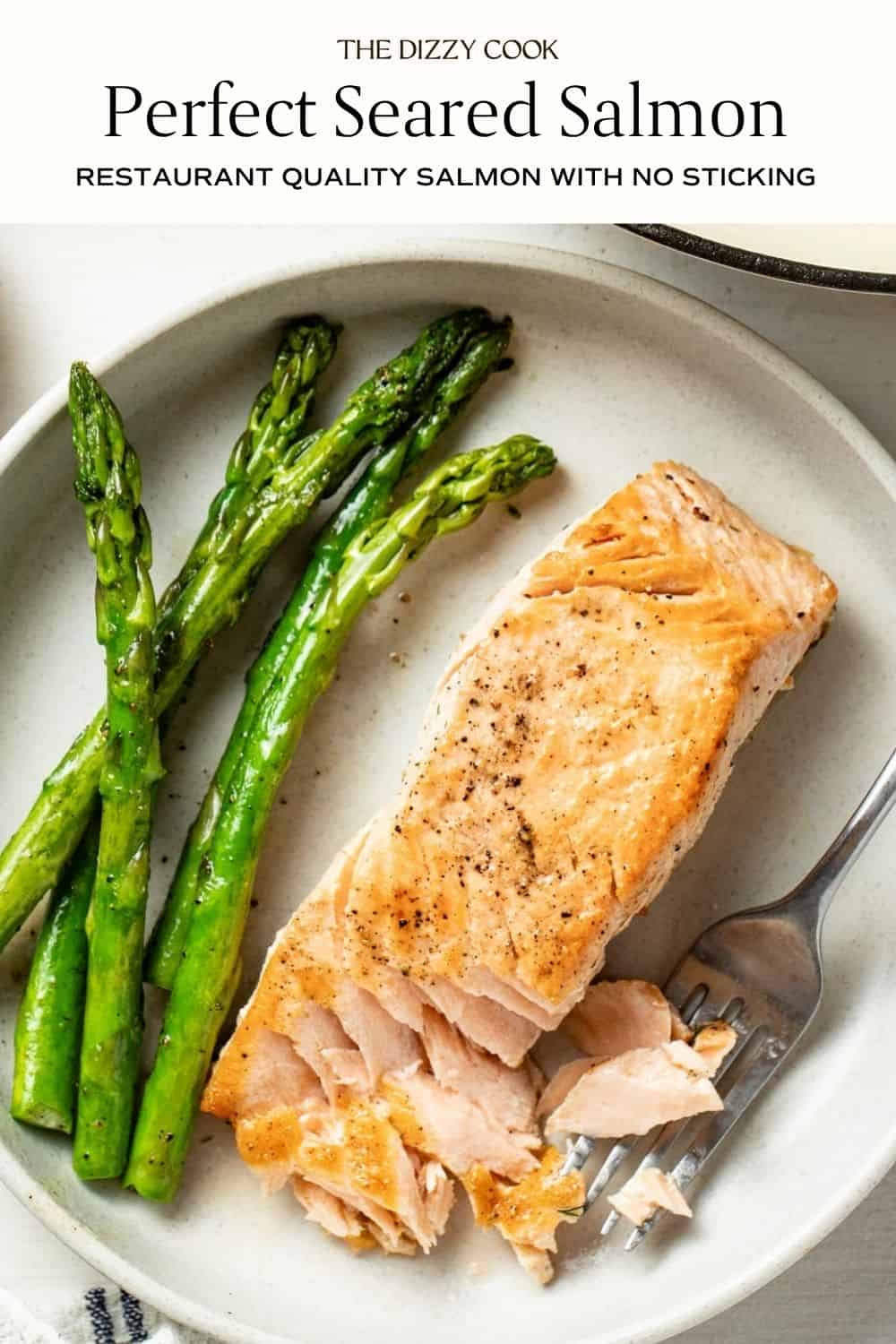
Perfectly brown and crisp on top, this pan seared salmon recipe produces restaurant-quality results without sticking, every single time. Use this pan-fried salmon as a main protein for dinner – on top of a salad, pasta, or with a side dish.
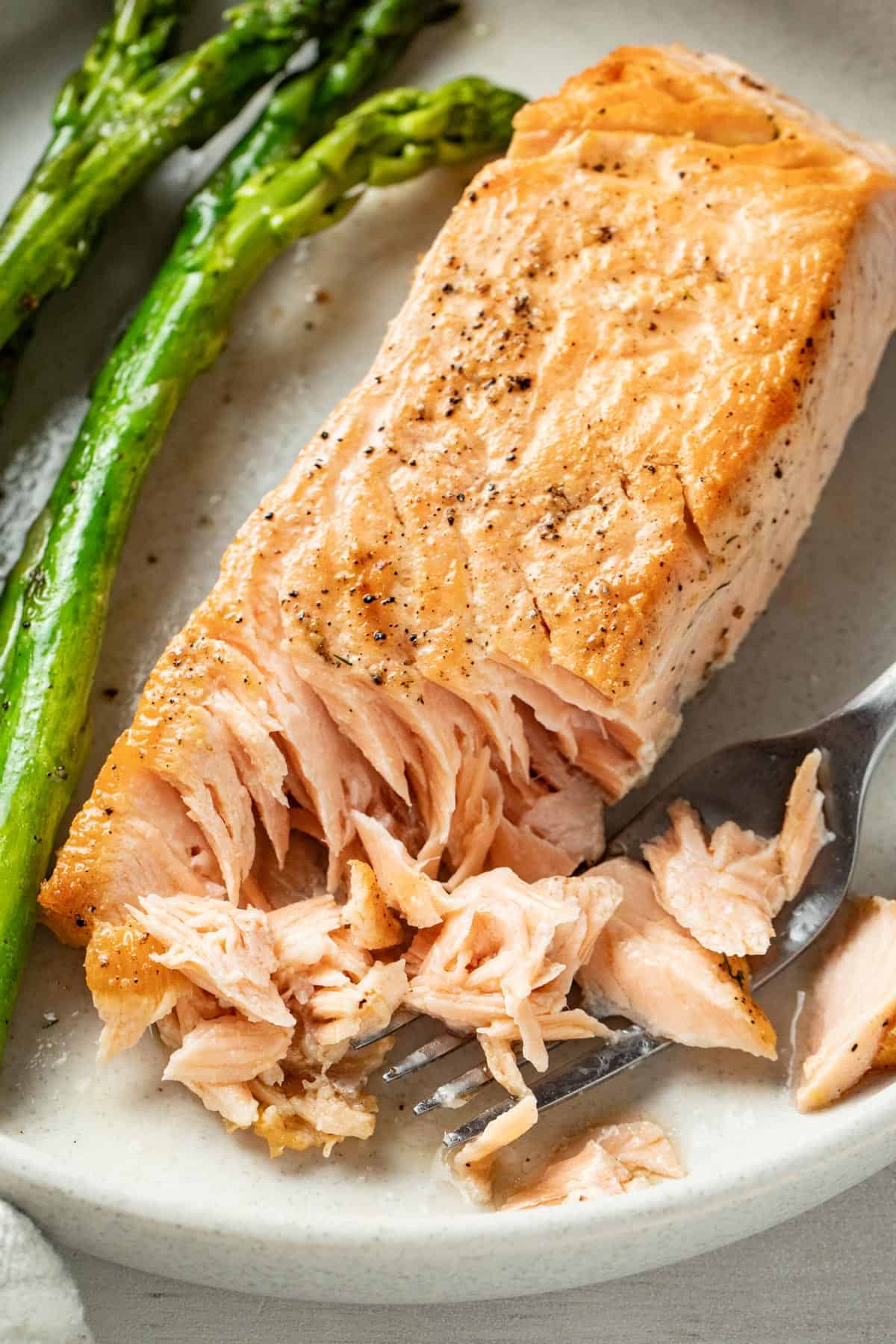
Quick Look: Easy Seared Salmon
- Total time: About 15 minutes from start to finish, or even less with a smaller piece of salmon.
- Main ingredients: Fresh or defrosted salmon fillets, olive oil, kosher salt and black pepper.
- When to serve: Use this basic salmon recipe when you need an easy protein for dinners. Any leftovers can be added to salmon quiche.
- Dietary information: This recipe fits a Mediterranean diet and is gluten free, dairy free, and also migraine diet friendly. The high omega-3’s in salmon are great for migraine prevention and brain health.
- Why you’ll love it: If you ever feel nervous making seared salmon, this hack will prevent the salmon from sticking to your pan every single time. It still produces a nice, crispy brown crust on the outside, but it also much easier to clean up. You can make this pan-fried salmon with skin on or skin off, depending on your preference.
As a recipe developer with migraine, I eat salmon at least once week as an easy way to get in omega 3’s. I love the texture of seared salmon, but find it can be tricky even for me to get it right every time, even as often as I make it.
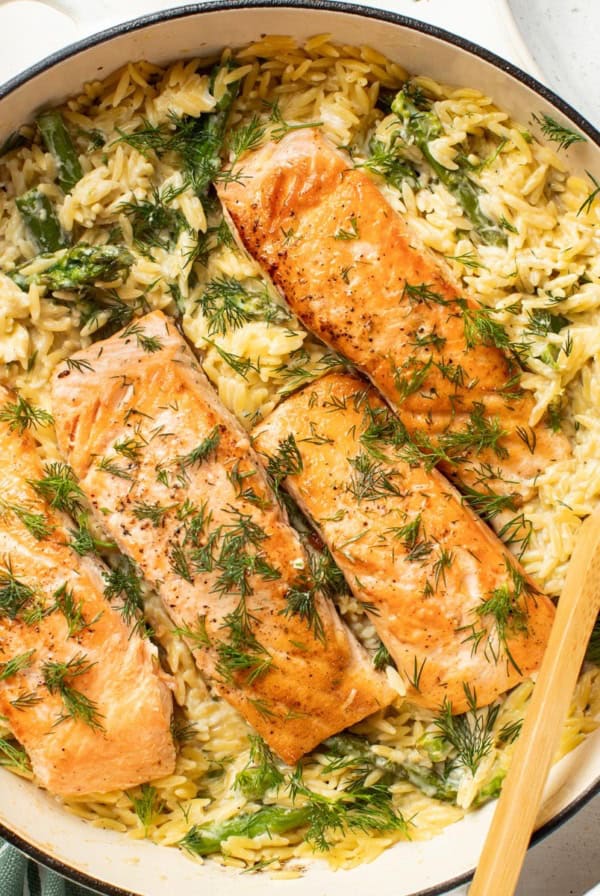
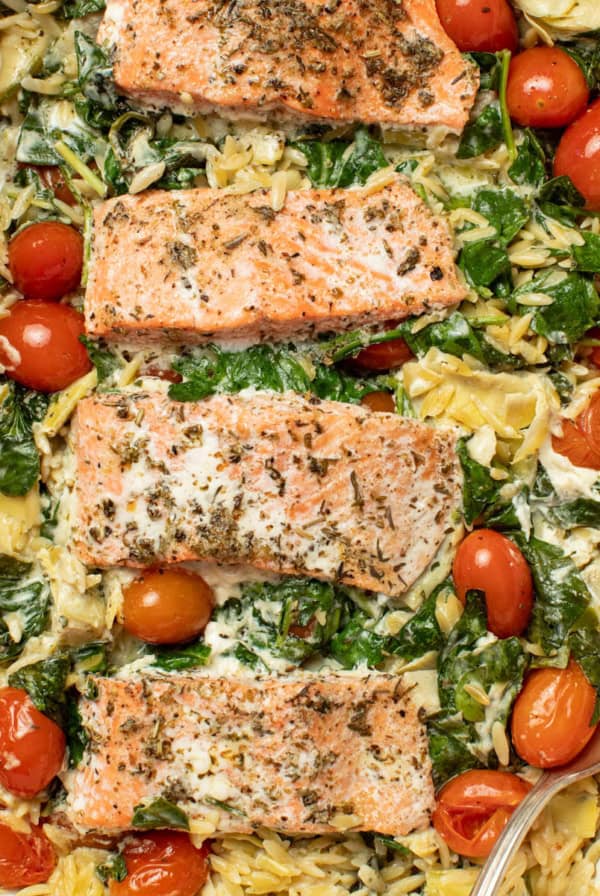
I first tried this parchment paper searing technique with my seared salmon and orzo recipe and couldn’t believe how well it worked. This pan-fried salmon recipe will become a staple any time you need a simple weeknight dinner.
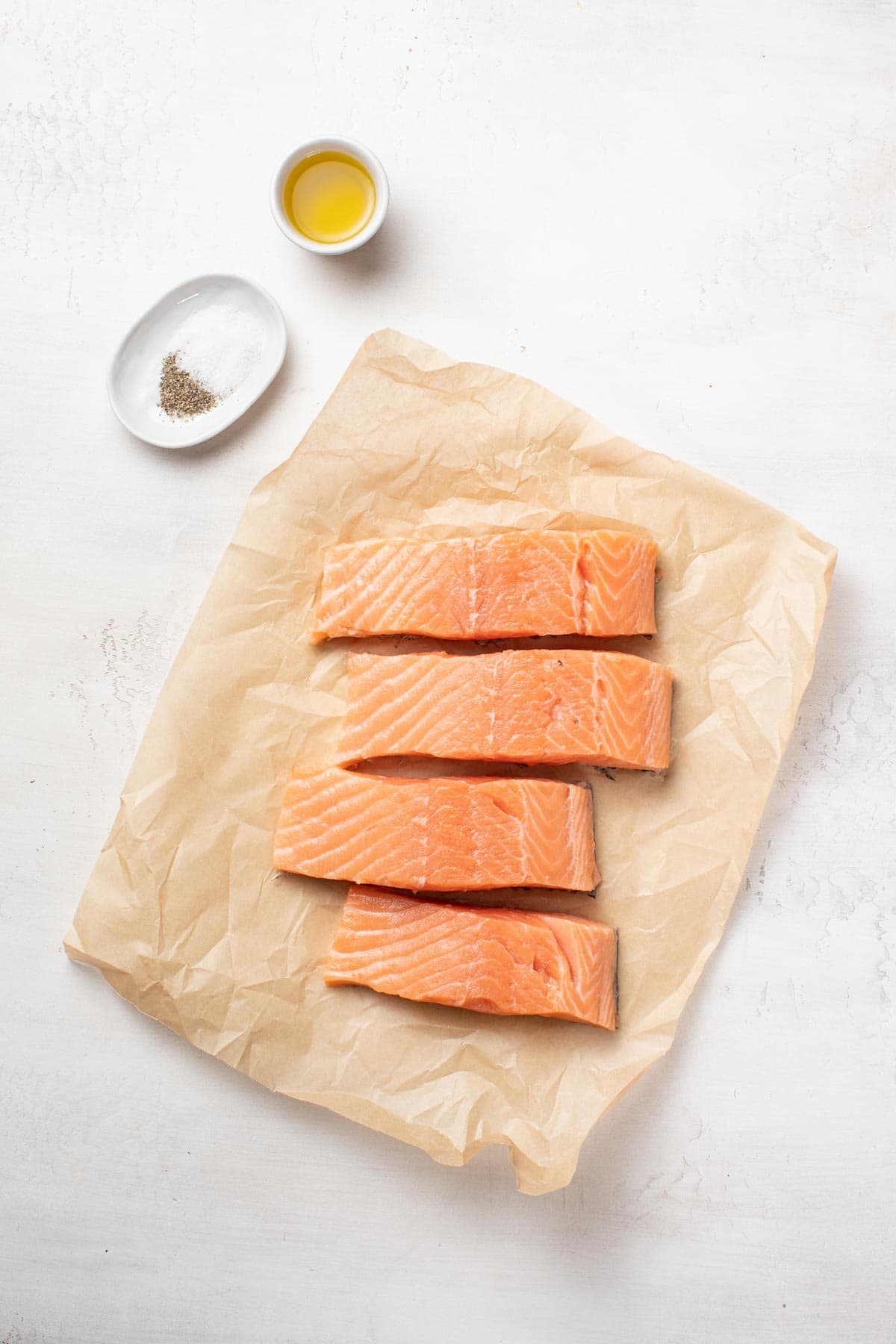
Ingredients
These are just a few details on what to look for when grocery shopping. See the recipe card for amounts and cooking times.
- Salmon – Salmon varies greatly in texture and flavor depending on what kind you get. Atlantic salmon is the most readily available, but wild salmon and king salmon will also work for this recipe. I tend to prefer king salmon because it has a good amount of fat and flavor that holds up well to searing. Usually salmon with a little more fat will sear better and produce that golden brown crispy layer. You also want a thicker piece, about 1 to 1 1/2 inches in thickness. If using frozen salmon, defrost overnight in the fridge and pat dry with a paper towel. Wild salmon tends to be a little more lean than farmed. It’s also much easier to overcook because a salmon with higher fat content won’t dry out as quickly.
- Olive oil – Because salmon is seared on a higher heat, I like to use a higher heat olive oil like Graza sizzle. You can also use avocado oil, or vegetable oil. If you’d like to use butter for searing, adding a touch of oil will help it cook at a higher heat without burning.
- Kosher salt – Diamond kosher salt is incredible for seasoning fish as it adds flavor without too much saltiness. Because the salt crystals are less dense than other brands, they season the fish well without overpowering. This is why you can use more in cooking.
Variations
Here are a few ways to turn this seared salmon into a full meal.
- Salmon with creamy lemon orzo
- Seared salmon salad
- Cajun salmon pasta
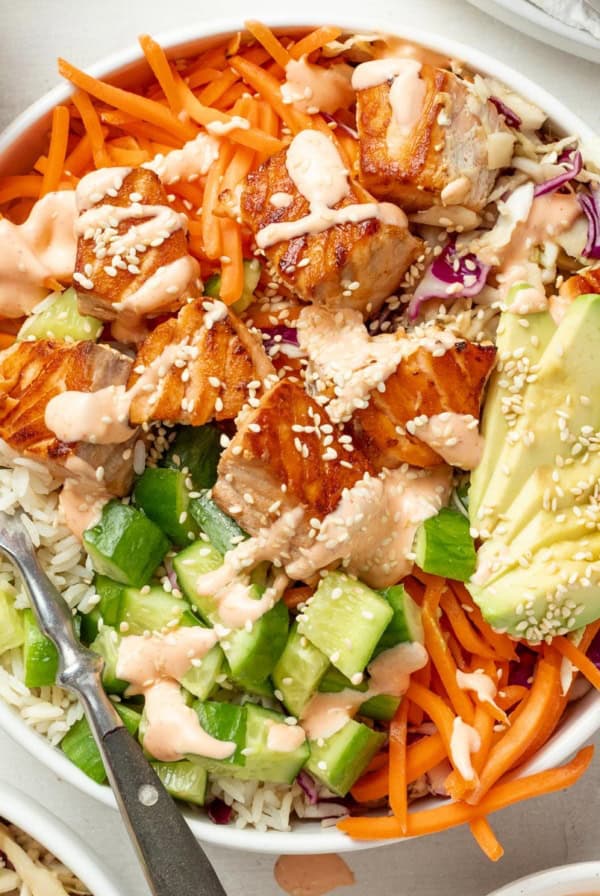
- Salmon rice bowls
- Salmon with mango salsa
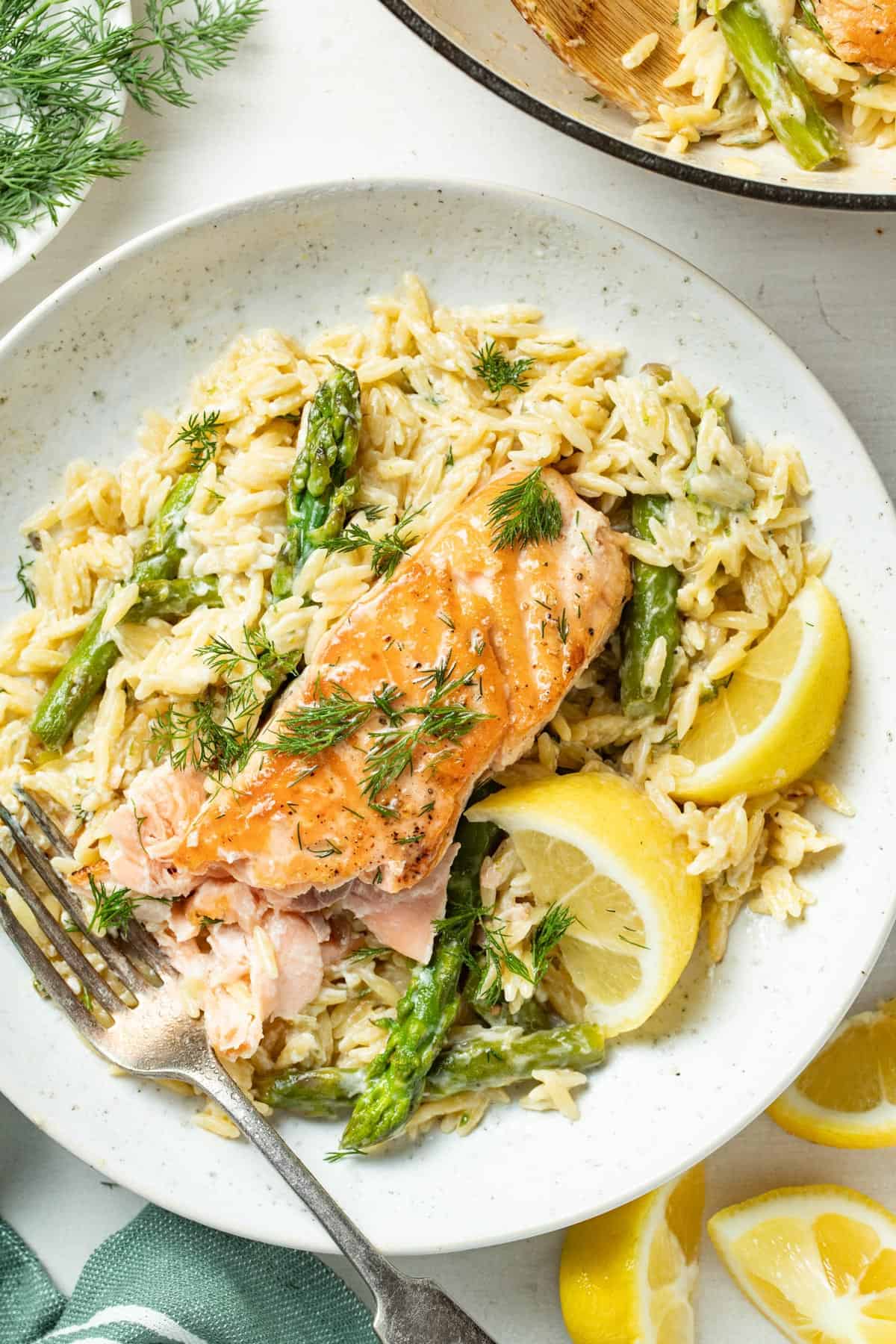
How to Make Pan-Seared Salmon
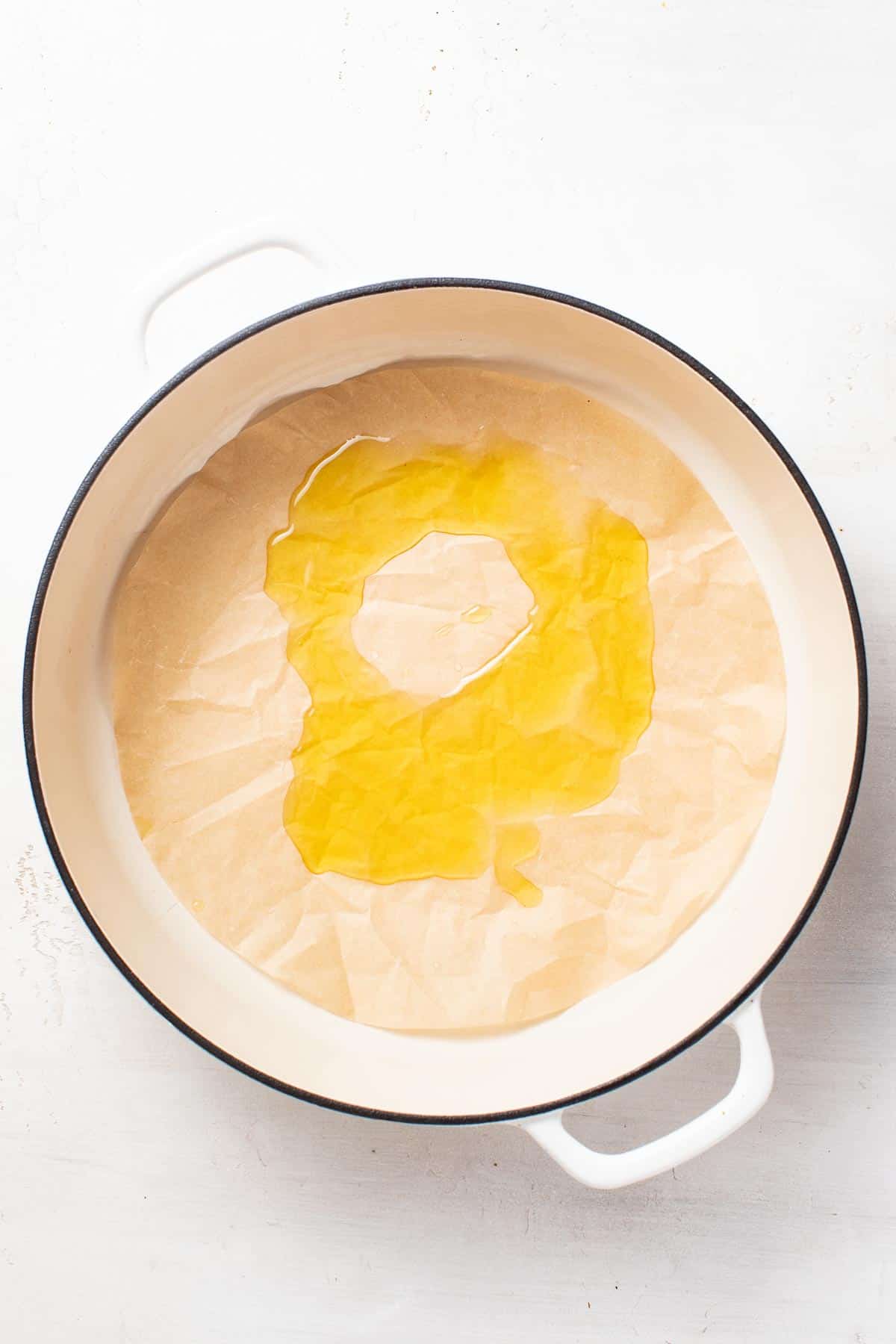
Step 1: Lay a parchment paper piece down and place the pan you’ll be using on top, then trace around it to get a perfectly round parchment piece, cutting it to size. Place the pan on the stovetop then place the parchment paper inside.
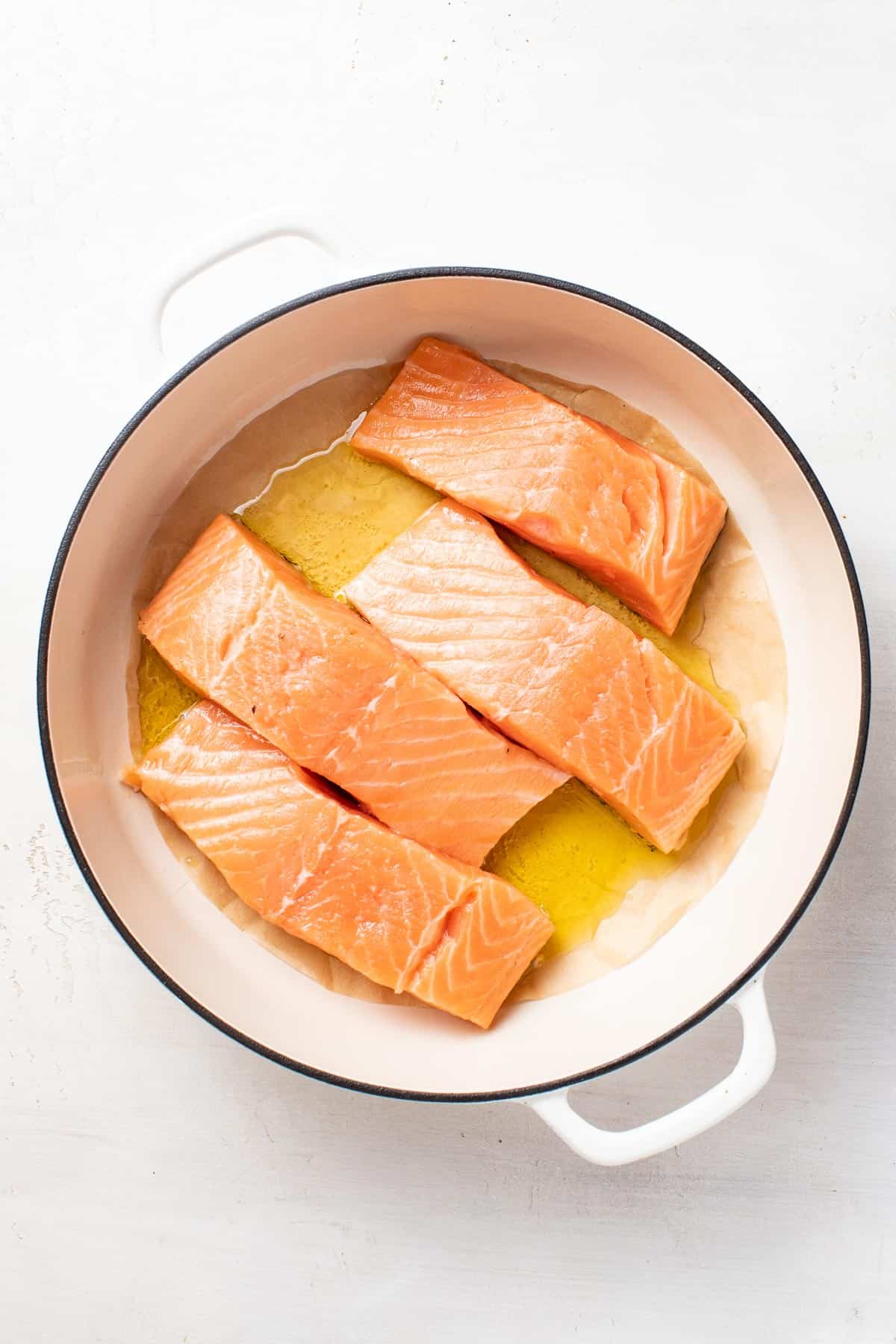
Step 2: Drizzle with 1-2 tablespoons of olive oil on top of the parchment paper and heat over medium high heat. Add the salmon to the pan, skin side down, and cook for 5-7 minutes until golden brown and crispy.
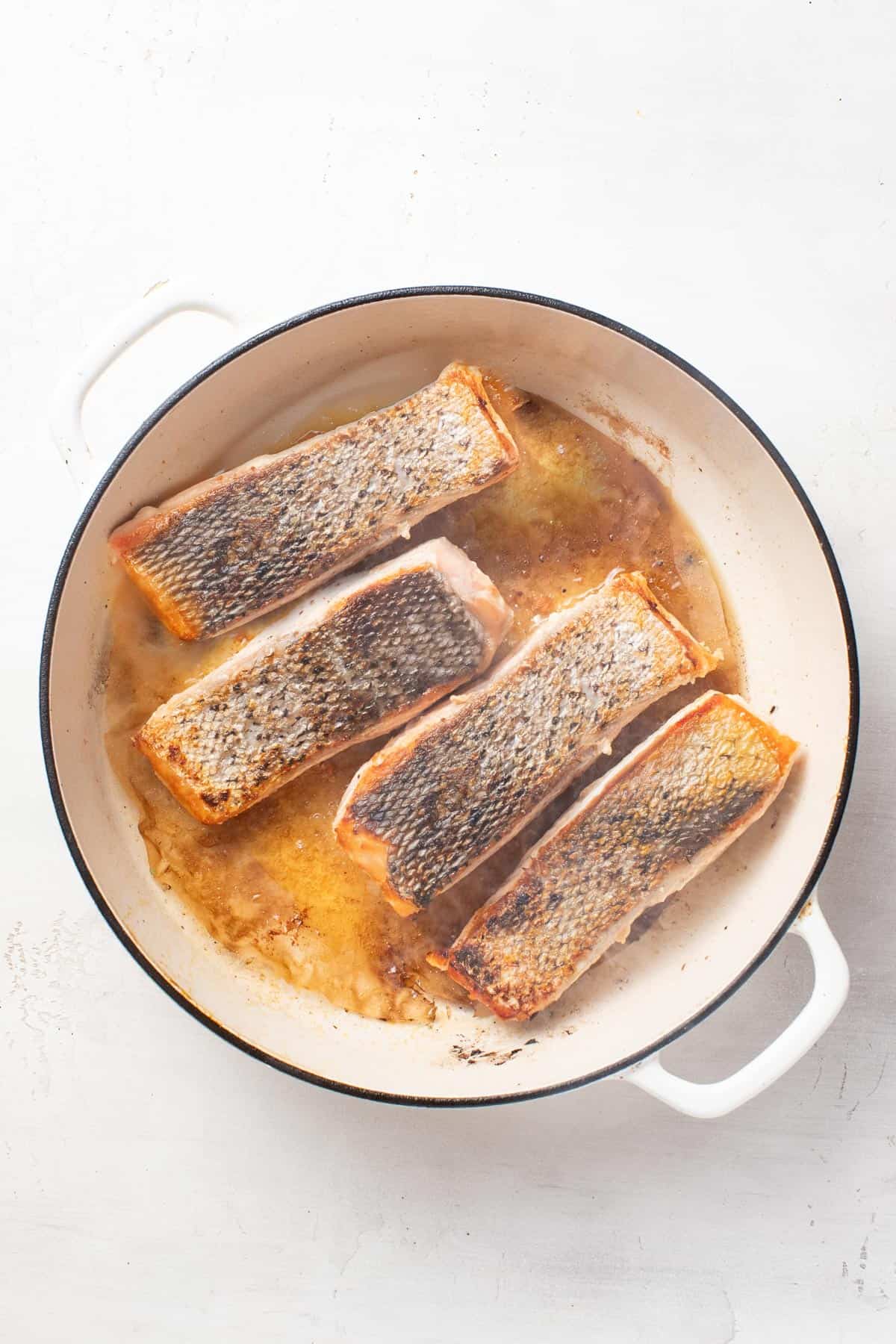
Step 3: Flip and cook another 3-5 minutes on the other side until the fish is opaque all the way through.
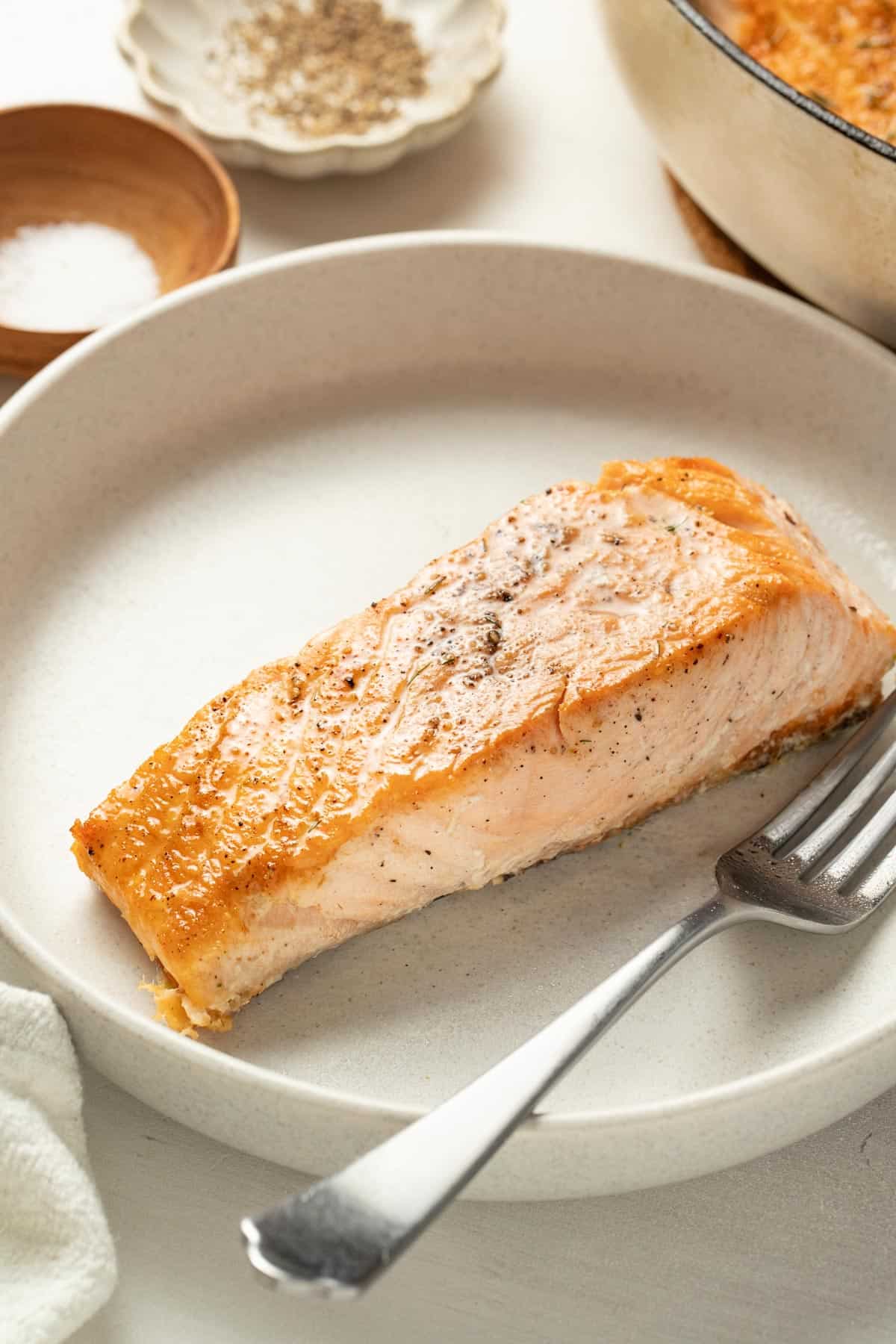
Step 4: Transfer the salmon to a plate lined with a paper towel and set aside for serving.
Recipe Tip
For parchment paper I like to use unbleached parchment paper for searing. It will not stick to the pan or cause any issues if you follow the directions and keep the heat at a medium high level. Avoid using it at very high heat without any fish cooking.
Storage Information
- Refrigerator – Salmon can be stored in an airtight container for up to 3 days. I do find it’s best enjoyed within the first 1-2 days as it can get more fishy the longer it is stored.
- Freezer – Leftover salmon can be frozen for up to 3-4 months, however, it will lose some of the crisp texture on the outside layer. If freezing cooked salmon, I recommend using it broken apart in salads or baked into dishes like this quiche. You could also stir it into this salmon and broccoli pasta.
Serving Suggestions
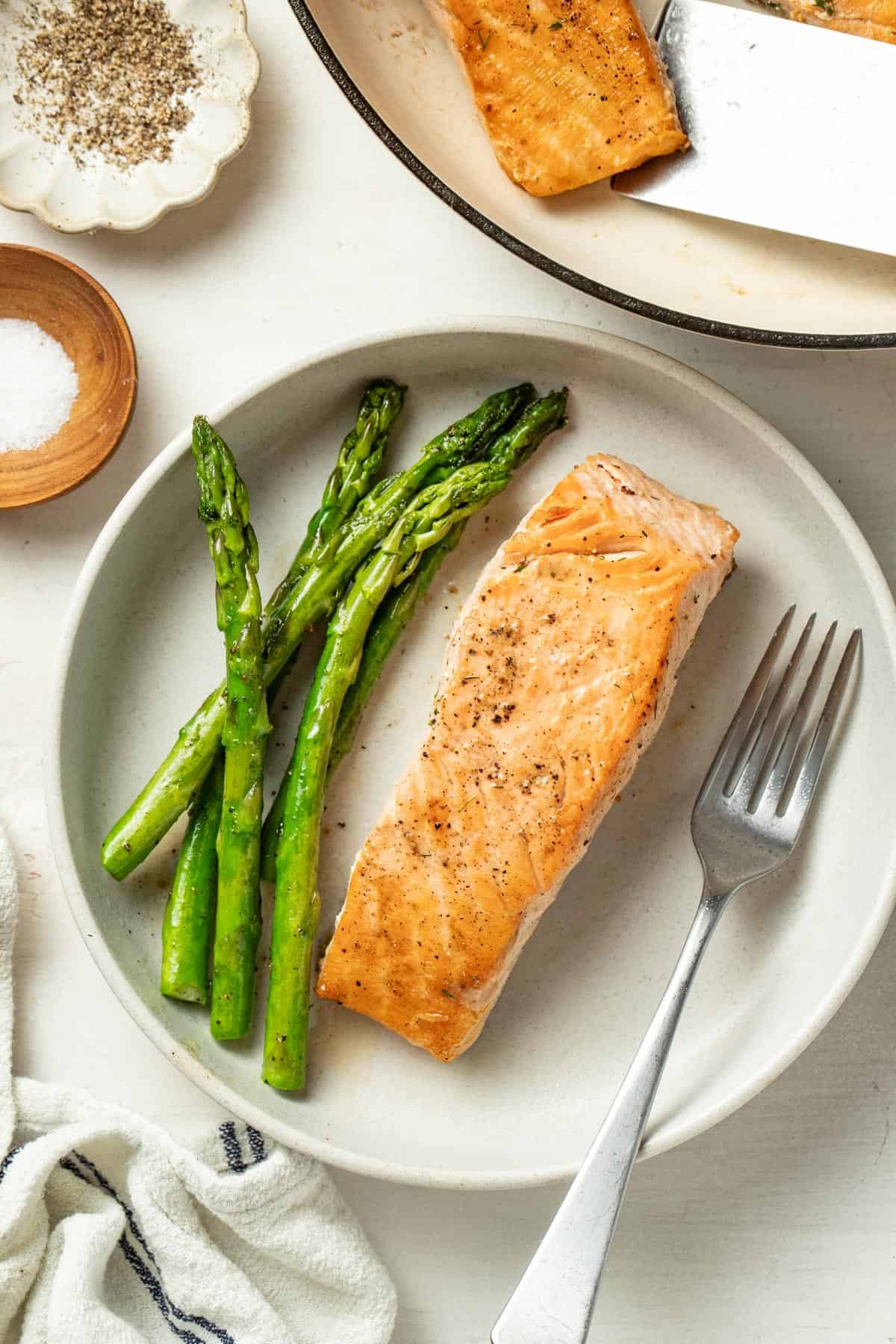
Seared salmon is lovely as a star protein, and pairs great with so many different side dishes. I recommend it with a simple pasta like this garlic butter pasta, Boursin pasta, creamy broccoli pasta, or zucchini pasta to pack in some extra vegetables.
For vegetable sides, try it with these Boursin mashed potatoes, roasted carrots and parsnips, or dense bean salad.
More Easy Salmon Recipes
For more recipes like this pan-seared salmon, don’t miss these posts that pack extra flavor.

Pasta
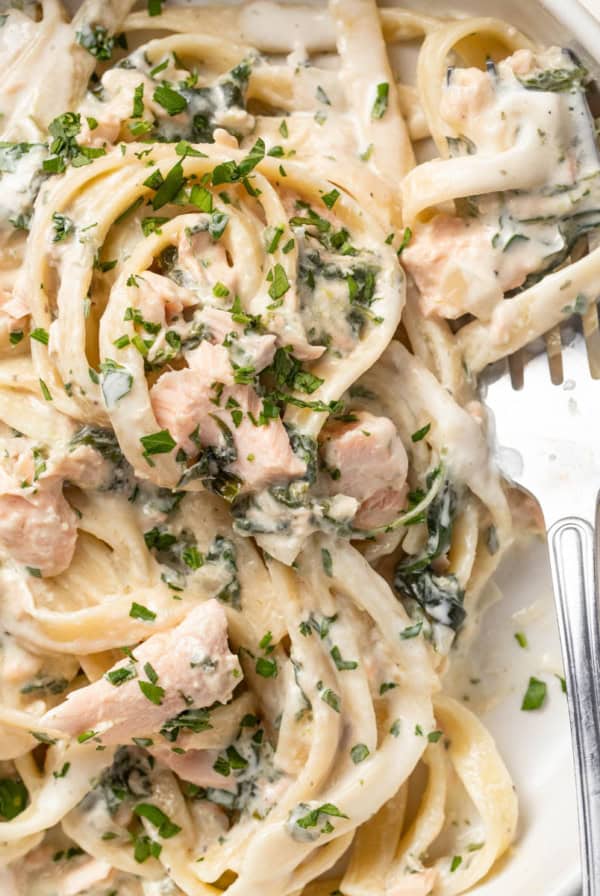
Creamy Boursin Salmon Pasta


Seafood
Sweet Chili Salmon (Air Fryer or Oven)
Love this recipe? Please leave a 5-star 🌟🌟🌟🌟🌟 review in the recipe card! Don’t forget to tag me @thedizzycook on Facebook and Instagram, and follow along on Pinterest for more great recipes!
Perfect Pan-Seared Salmon
Ingredients
- 2 tablespoons extra virgin olive oil
- 1½ pounds salmon, cut into 4-6 ounce fillets
- 3/4 teaspoon kosher salt
- 1/4 teaspoon freshly ground black pepper
Instructions
- Line a large skillet or braiser with a large piece of parchment paper to prevent sticking and make cleanup a breeze. Heat skillet over medium-high heat and drizzle 2 tablespoons olive oil on the parchment paper.
- When the skillet is hot, place salmon filets skin side-down on top of the parchment paper. Season with salt and pepper. Cook for 5-7 minutes until the skin is golden and crispy, then use a spatula to gently flip the salmon over.
- Cook on the other side for 3-5 minutes until the fish is opaque all the way through. Transfer the salmon to a plate and set aside. Discard the parchment paper.
Notes
- I used skin-on salmon fillets, but you can remove the skin if you prefer it that way.
- The parchment paper method is not necessary, but will absolutely help with sticking if that’s ever an issue for you. I prefer to use unbleached parchment paper.
Nutrition
Nutrition information is automatically calculated, so should only be used as an approximation.






It really did make searing easy and I didn’t have any sticking. Will be using this again.