
This post may contain affiliate links. Please see our disclosure policy.



Did you know there are several different types of magnesium that are beneficial for different things? When my doctor recommended taking magnesium for migraine, they just gave me the general term without specifics.
So which magnesium was best for me? I had to do some research to find out!
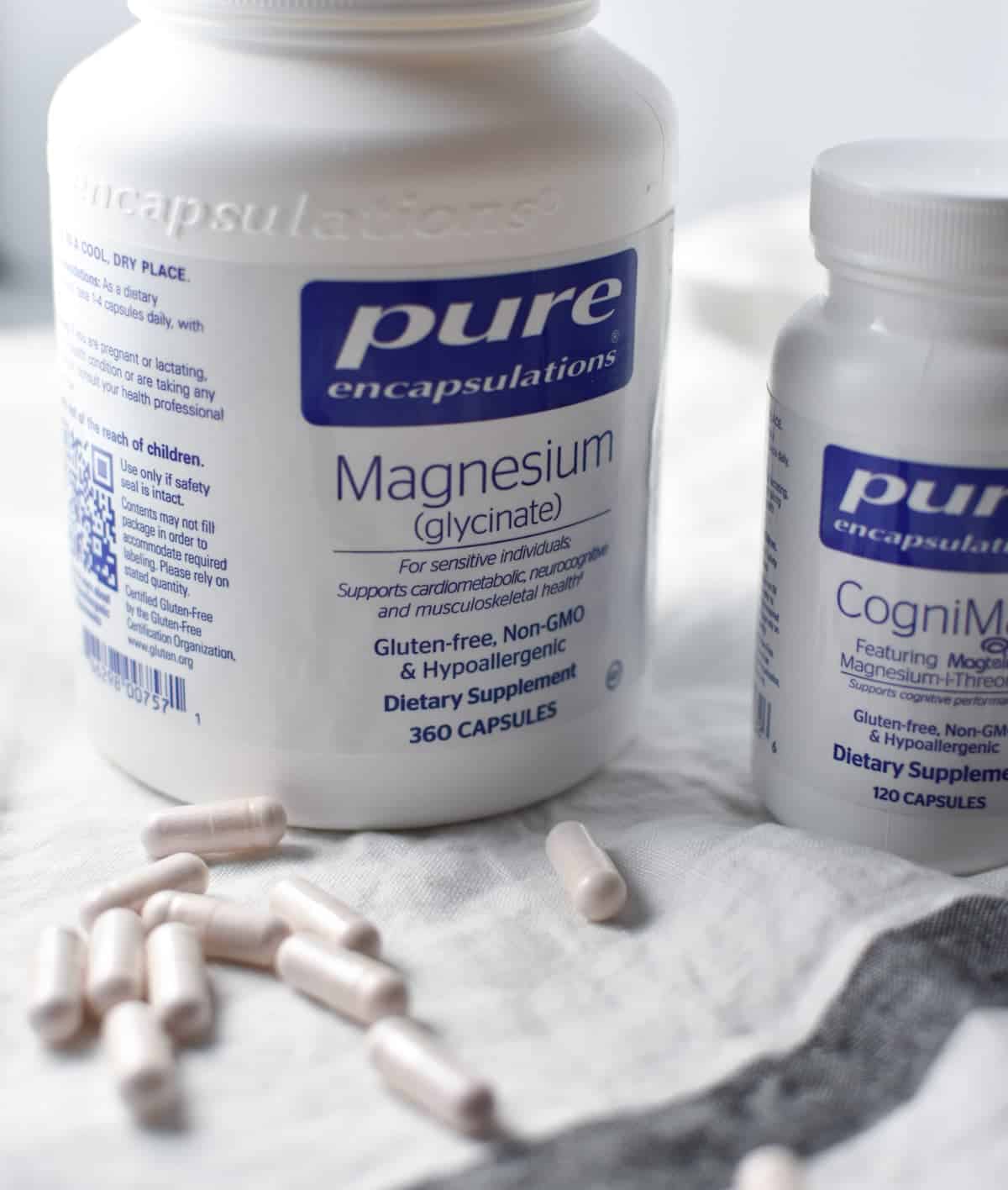
Table of Contents
- Magnesium for Migraine
- Magnesium Bioavailability Matters
- Recommended Magnesium Dosage
- Types of Magnesium for Migraine
- Magnesium Glycinate
- Magnesium L-Threonate
- Magnesium Chloride & Magnesium Sulfate (Salts and Lotions)
- Magnesium Malate
- Magnesium Citrate
- Magnesium Oxide
- Magnesium Orotate and Magnesium Taurate
- Magnesium IV Therapy
- Fillers, Gelatin and Binding Agents
- More Magnesium Posts
This article was originally published December 2018 and has since been reposted and repeated on a number of different migraine sites, including Migraine Again. This is the original article.
Magnesium for Migraine
Migraine disorders can be linked with magnesium deficiency, making supplementation of magnesium for migraine necessary for most of us. However, if you’re finding that you have more digestive “issues” when upping your magnesium intake, you’re not alone.
I wasn’t aware until I started doing a little more research after my Migrelief formula was changed. I realized that the magnesium type in this particular supplement (magnesium oxide) was known for laxative properties – this was something I did not need!
When people search for a new magnesium supplement without knowing what to look for, they usually focus on price. This means many aren’t getting the full potential out of supplements and most likely won’t see a difference with symptoms.
There are usually three reasons why someone wouldn’t see a benefit of magnesium for migraine:
- Our body doesn’t react well with the type of magnesium we’re taking.
- The supplement contains a lot of fillers, making it poor quality and difficult to absorb.
- The capsule contains gelatin, which can be a migraine trigger for some people when taken everyday.
- The amount that is being taken is either not enough to make a difference, or too much to handle.
Magnesium Bioavailability Matters
According to Ancient Minerals, “If one was to ingest the commonly recommended (albeit modest) adult dosage of 300-400 mg magnesium per day in (a) poorly absorbed form, it could equate to a usable dosage of only 12-16 mg.”. They also go on to quote Holy Water, Sacred Oil: The Fountain of Youth where it is mentioned that magnesium is most effective when contained in the intestine for a minimum of 12 hours.
If magnesium was going through the system faster (ie. in the form of diarrhea), you’re not getting the full benefits of the supplement you’re taking.
One key word to know is “bioavailability”, which means how well the supplement is absorbed by the body. If the supplement you’re taking is not very bioavailable, it’s not being metabolized and you’re probably not reaping the benefits from it.
As we age and our metabolism slows, it can be even more important to focus on bioavailability, as vitamins can become more difficult to absorb. This is why choosing high quality supplements is so important. Fillers, binders, and artificial ingredients or flavorings can all limit absorption.
Magnesium itself isn’t a highly absorbable supplement to begin with, but if you have a deficiency then your body will be able to absorb more than it would otherwise.
Recommended Magnesium Dosage
Neurologists generally recommend taking 400-600mg a day of magnesium for migraine prevention because that is the amount used in studies showing its efficacy. This is also why most doctors will recommend magnesium oxide.
It is inexpensive and has proved to be helpful in scientific studies, most recently in a 2021 study. However, as a migraine patient and someone speaking with patients daily, this is not the most well-tolerated option in these amounts.
It’s important to note these amounts are the elemental value. Occasionally brands will print the maximum value which makes it look like 1000+ milligrams of magnesium in one pill when the elemental value will be 50mg. Look carefully at what you’re buying to make sure it is in elemental values.
Taking higher amounts of magnesium can lead to digestive upset and diarrhea, particularly with magnesium oxide. To get to the amount recommended for migraine, many of us have to combine types of magnesium.
Personally I do a combination of magnesium threonate in 72mg, which helps with morning brain fog, about 300mg of magnesium citrate, which helped with regularity postpartum, and about 240mg of magnesium glycinate which totals about 600mg a day.
I’ll add in more magnesium glycinate during attack days, or use magnesium lotion. This is a combination I’ve changed around over the years which just shows you may need different dosages at different times.
It’s important to discuss the dosages with your doctor and get the maximum amount recommended for you.
A Note on Blood Tests – Blood tests for magnesium are not an accurate reflection of deficiency, especially for people with migraine. If your neurologist orders a blood test and tells you that you don’t need magnesium supplementation because you’re not deficient, this is a red flag. It’s important that magnesium crosses the blood brain barrier, where you need it the most!

Types of Magnesium for Migraine
What’s the best type of magnesium for migraine? Truthfully I can’t answer that. Because what works well for me for vestibular migraine prevention and acute treatment may not work for you.
Over the years after speaking with thousands of people, I know what seems to work the best for the majority, but there will always be people who don’t follow the normal path. I recommend reading through the different types and deciding what might work best for the issues you have.
Another thing to watch for when researching magnesium supplements? How many articles are connected to a brand selling their product. I tried to sort through all that for you to bring you a quick breakdown of each form. Here are some of the most popular types of magnesium for migraine.
Magnesium Glycinate
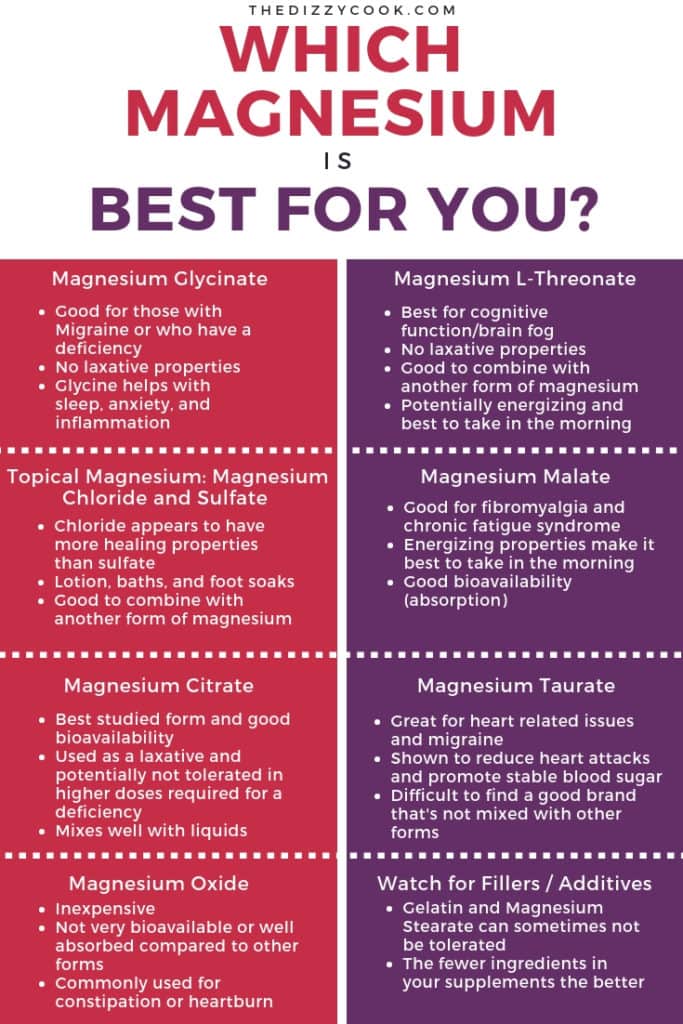
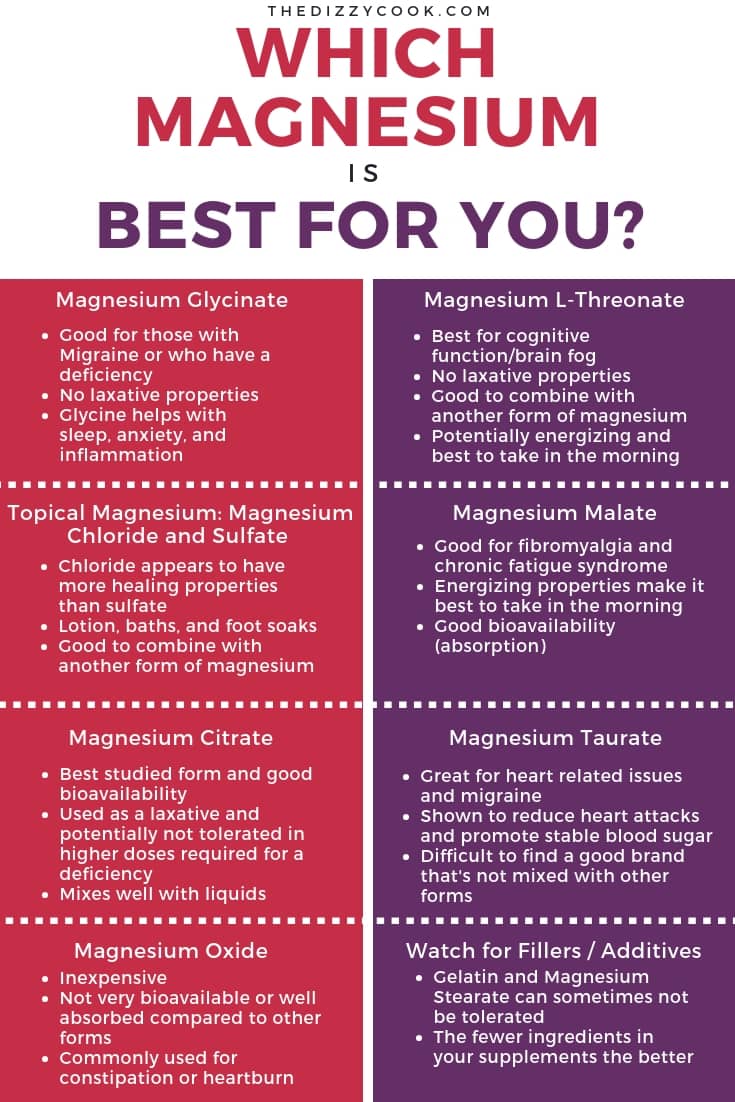
This type of magnesium is one of the most effective at boosting low levels of magnesium quickly, without causing digestive problems or diarrhea. It is ideal for those who cannot tolerate the laxative effects of citrate or oxide and need a more well absorbed form.
Because migraine patients are recommended to take around 400-600mg daily, it’s the best way to make sure you’re getting a higher amount in and not losing it all in the toilet, for lack of a better phrase.
Glycine, an amino acid to which the Magnesium is bonded, supports cognitive function and calms neural functions. Therefore patients find this form helps with reducing inflammation, sleep, and anxiety, making magnesium glycinate great for those with Vestibular Migraine.
Final Thought: Magnesium glycinate is good for anxiety, vestibular migraine, and if you have a sensitive stomach.
Recommended Brand: Pure Encapsulations (strictly glycinate in pills), Designs for Health Magnesium Glycinate Complex (blended form), and Magnesium Glycinate Powder (for those who cannot tolerate pills). I have these brands and more available for a discount in my private supplement store.
Magnesium L-Threonate
A newer type of magnesium, magnesium L-threonate is one of the only forms of magnesium that has been shown to penetrate the blood brain barrier, directly raising the magnesium levels in the brain. In studies, it played a positive role with improving Alzheimer’s and other cognitive issues.
Developed by MIT grads, Magtein promotes improvement of learning abilities, memory, and cognitive function. It even helped me get rid of my morning brain fog, a common symptom with Vestibular Migraine. This type also doesn’t contain laxative properties that you would find with citrate or oxide.
The downside? It’s expensive. But since I wrote this article almost five years ago, this is becoming a widely recommended supplement, just based on my own experience with threonate for migraine, as well as my readers!
Threonate is a good supplement to use in addition to another form of magnesium so you’re saving money, and reaping benefits from both. It would be difficult to get the total amount you need when most capsules only contain 72-144mg total.
Final Thought: Magnesium Threonate is good for cognitive function, energy, and brain fog.
Recommended Brands: Pure Encapsulations Cognimag and Life Extension Neuro Mag. I have these brands and more available for a discount in my private supplement store.
Magnesium Chloride & Magnesium Sulfate (Salts and Lotions)
You might be more familiar with epsom salts, also know as magnesium sulfate. Through research and discussion with other Migraine patients, it seems as if magnesium chloride is like Epsom salt on steroids. It appears to have better absorption and cellular penetration, as well as lower tissue toxicity.
This form of magnesium is wonderful for topical applications, especially if you’d like to supplement your oral intake. This would include adding it to a bath, foot soak, or applied topically in a lotion or spray form.
Concentration of the solution, length of time it is in contact with the skin, and area it is applied all affect magnesium chloride’s efficacy. Some find that if they do a soak for 20-30 minutes or apply to their feet before bed it helps to calm the body and promote a deeper sleep.
On the other hand, there’s not a lot of great scientific research to back this up according to this 2017 study. I read a quote the other day that said something to the effect of “a placebo is the perfect example of how healing starts with the mind”.
I personally believe there’s more merit to topical magnesium than this study suggests, and it’s worth a try to see if it truly helps you. Since chloride is more expensive than epsom salts, I like to mix both if taking a full bath.
Final Thought: Topical magnesium is good for those looking for relaxation and adding additional magnesium without digestive upset. Great for those who cannot tolerate capsules.
Recommended Brand: Ancient Minerals Bath Salts and Goodnight Lotion. I have these brands and more available for a discount in my private supplement store.
Magnesium Malate
Magnesium malate has great reviews for those suffering with fibromyalgia and chronic fatigue syndrome. It’s a combination of malic acid and magnesium, which is said to have a higher bioavailability. Another positive is that it supports energy production and an ability to chelate toxic metals. Aluminum is linked to neurological disorders, so it may be beneficial for anyone concerned with this aspect.
Malate also creates less GI stress than citrate and oxide. The only downside from reports was some find it too energizing. Therefore it is recommended to take in the morning. It also could potentially be too stimulating for those with Vestibular Migraine.
Final Thought: Magnesium malate can be good for fibromyalgia and chronic fatigue syndrome/ systemic exertion intolerance, if comorbid with migraine.
Recommended Brand: Seeking Health Malate Powder and Designs for Health Capsule. I have these brands and more available for a discount in my private supplement store.
Magnesium Citrate
One of the most popular and well-studied forms of magnesium, magnesium citrate bonds to citric acid, making it more absorbable than some other forms like oxide, but also larger pills with less elemental magnesium because citric acid is a larger molecule. If you google “magnesium citrate”, you’ll notice it’s promoted to relieve constipation – which is especially great for postpartum or pregnant women!
However, if you’re taking this at the 400+mg recommended amounts each day, it could cause diarrhea. If it does, consider lowering the dosage and replacing with another type, like glycinate or threonate.
This type of magnesium mixes well with liquids and could be an option for those who cannot tolerate pills.
Final Thought: Magnesium citrate is widely available and well-absorbed, if tolerated without digestive upset. Could be a great option for pregnant and postpartum moms who struggle with constipation.
Magnesium Oxide
Neurologists recommend this form most often because it is used in studies for migraine relief, it’s cheap, and it is widely available. Because it is a smaller molecule, it can come in smaller pills with a greater elemental value, meaning you won’t have to take as many to get a high dosage.
Yet many patients find they cannot reach the maximum dosage without causing some digestive upset, or they don’t see a huge benefit from it.
While magnesium citrate can relieve constipation, oxide is commonly used to relieve heartburn and as a laxative. It is not as bioavailable as magnesium citrate. In my opinion, there are better forms out there that will be more highly effective if you’re not seeing results.
Final Thought: Magnesium oxide is well-studied, but not the best form for absorption and can cause digestive upset in large amounts.
Magnesium Orotate and Magnesium Taurate
I’ve seen mixed reviews on magnesium orotate and simply not enough good evidence to make a suggestion for it. It seems to be helpful with heart related issues.
Taurate, the amino acid taurine combined with magnesium, is more well-studied. It has been shown to reduce heart attacks and promote stable blood sugar levels. In studies, magnesium taurate was effective in migraine prevention while having limited side effects. If you also have cardiovascular issues, this could be a good choice for you.
Final Thought: Magnesium taurate is good for those who need to stabilize blood sugar levels or have cardiovascular issues.
Recommended Brand: Natural Rhythm makes two kinds. Here is the Magnesium Taurate by itself. Triple Calm combines glycinate, malate, and taurate. The only downside is if it starts to help you, you won’t know exactly which type is helping or if it’s the collection of them. I have these brands and more available for a discount in my private supplement store.
Magnesium IV Therapy
An expensive but occasionally necessary option, magnesium IV therapy can be helpful for severe hydration or intense attacks without a visit to the emergency room.
IV therapy at home typically costs about $150-300 (in the Dallas area) so I use it as a last resort. Still, it is less expensive than an emergency room visit.
Two years ago I had an attack so bad that I couldn’t use my fingers to type, and I was hosting a Healthline chat later that night. A magnesium IV at home got them working again within just an hour.
If your doctor has approved the use of magnesium IV therapy, google “IV therapy” near me to find one in your area. This is an example of one I have used in the Dallas area – Nuuvo.
Fillers, Gelatin and Binding Agents
Gelatin – As always, even when choosing supplements, we must check the ingredients – the fewer the better. I find it easier to search for vegetarian or vegan capsules, which eliminate gelatin. Some patients find gelatin, even in a small capsule form, a potential migraine trigger.
I often wonder if people mistake this for a reaction to the supplement as it’s easier to blame the attack on the supplement itself. Since there are many vegan alternatives out there, it’s better to avoid gelatin unless you know it does not bother you.
Fillers and binding agents – These are cellulose, stearic acid, and magnesium stearate. Magnesium stearate has the most controversy of them all due to a 1990 study which found that suppressed cells that are responsible for the immune system. I’ve also read in some of my Migraine groups that it appeared to be a trigger for a few people.
Fillers by themselves are not necessarily as bad as they sound. Some manufacturers use them to bulk up which might be a very tiny product without it. What you want to be careful of is brands that are using more fillers than actual product.
While it may be less expensive, the fillers won’t be helping you feel better in the long run. The goal is not to eliminate the fillers entirely, but to choose brands with very few of them in the ingredients. Having only one is best! That’s why I’ve recommended the brands above.
A few people do find that certain forms of magnesium can make them dizzy or feel worse. It can take some trial and error to find the perfect form for you. Always consult your doctor before trying a new supplement. If you have any feedback about any of these supplements, let me know in the comments.
More Magnesium Posts
For more helpful information on magnesium and other supplements for migraine, check out these articles.


Natural Treatments
Natural Treatments for Vestibular Migraine

Vestibular Migraine
The Vestibular Migraine Treatments That Cured My Daily Dizziness

Natural Treatments







Hey Alicia! I just went to my neurologist today and talked about magnesium. I loved jumping to your article to compare notes. I did take magnesium glycinate the first year, but with so many symptoms it was hard to tell what was helping. My neuro recommended trying Magnesium Citrate again (along with everything else I’m doing) just to see if it stops my remaining breakthrough symptoms. Worth a shot! Thanks for breaking it all down and hope you are feeling well 🙂
Hi Alicia! I suffer from both migraines and GI issues.
Any suggestions on which magnesium would be best to try? I’d like to control both issues.
Thank you for all the information, I’m just a little confused which to try.
Hi Cheryl,
You could probably try any of them except citrate and oxide. I personally really like glycinate and threonate. I think the best way to go is start at a low dose and work your way up to what you can tolerate. 🙂
I found Magnesium Taurate on Amazon and it is the same brand that makes Triple Calm. I may try that instead of the triple calm because I tried the glycinate and it made me more dizzy unfortunately.
Oh I just found it! I’ll have to add that to the post. That’s too bad. I’ve heard that from some people about different kinds of magnesium. Although glycinate usually works for a lot of people, it still seems like you have to find that perfect fit. Let me know how the Taurate goes!
I was upset that it did not work for me because I had heard great things. But I will try again with the Taurate and let you know how it goes. I have not given up hope that something with help me. 🙂
Hi Robin, I also feel like magnesium glycinate increased my dizziness. How much were you taking and did you just cut it out cold turkey? Did Taurate help you?
I did cut out the glycinate cold turkey because I did not take it long. It bothered me too much.
I thought the Taurate was helping me but when I had to stop taking it because of other medication I didn’t feel a difference so I’m not sure.
Thanks, Robin
Thanks Alicia! I didn’t know they were absorbed better with some fat. I’ll try that as well. I do take probiotics to make sure my gut is healthy and can absorb as much as possible.
Hi Alicia,
Fantastic information! I started taking 2 Conimag in the mornings and 3-4 Glycinate at night. I find that’s the best combo for me. I want try the topical forms as well. Thanks for the recommendations. I have never taken the Cognimag on an empty stomach. I typically try to eat something so I don’t take it right when I get up. Have to taken it on an empty stomach? If so, have you had any stomach issues with it?
Hey Stacy – You do exactly what I do! I’m having success with it as well. I have never tried it on an empty stomach either, but I have a really sensitive stomach so most supplements upset it if I don’t at least eat a tablespoon of sunbutter with it. I hear that they’re better absorbed with some fat too.
Hey friend! Great info for so many. Thanks for taking the time to put this together. Just for statistical purposes…I take 1 Glycinate and 1 CogniMag (threonate) in the morning. Then 1 more CogniMag mid afternoon and then 1 Glycinate around 8:00 PM. This seems to be a big part of my daily routine in helping me feel so much better. My “brain fog” is literally gone. ????????
Thanks for the advice, Liz! I’m sure it will help someone else. 🙂
This is great info. Question, have you ever tried Doctor’s Best? I was taking that one for 6 weeks but I still continued to have e stomach trouble with it. Maybe it just wasn’t a good brand. I am goi g to give Pure a chance to see if it works better for me.
I’ve never personally tried that brand, but if it was citrate that does the same thing to me too. I hope you’ll have better luck with this one. It takes some trial and error sometimes.