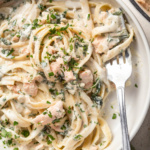
Creamy Boursin Salmon Pasta
A rich and flavorful meal all in one pan, this creamy salmon pasta is made super easy with the addition of Boursin cheese - perfect for weeknight dinners.
Servings: 4 people
Ingredients
- 2 tablespoons extra virgin olive oil divided
- 5 ounces baby spinach
- 2 shallots, diced
- 5.2 ounces Boursin Garlic & Herb cheese
- 1 pound salmon fillets, skin removed fresh or fully defrosted
- 1/4 teaspoon kosher salt
- 1/8 teaspoon freshly ground black pepper
- 8 ounces fettuccine pasta or favorite pasta of choice
- 2 tablespoons chopped parsley
- Optional: Juice of 1/2 lemon
Instructions
- Preheat oven to 400℉/200℃. Grease a large braising pan, 9x13 baking dish, or Dutch oven with 1 tablespoon of olive oil. Spread the spinach in the pan, then sprinkle the diced shallots evenly across the spinach. Add the Boursin cheese in the center, on top of the spinach. Arrange the salmon fillets around the Boursin. Season salmon with the remaining 1 tablespoon olive oil, salt, and pepper.
- Cover the pan with foil, then bake for 20-25 minutes until the salmon is just cooked through. While the salmon is roasting, bring a large pot of salted water to a boil. Cook fettuccine according to package directions. Reserve 1 cup of water before draining the pasta.
- Remove the pan from the oven and use a fork to break up the salmon, mash the Boursin, and mix everything together. Add the cooked fettuccine and 1/2 cup pasta water and use tongs to toss everything together. Taste and season with salt, pepper, and lemon juice if desired. Add more pasta water if needed. Serve immediately with chopped parsley on top.
Notes
- Use fresh salmon fillets that have been fully defrosted overnight in the fridge, and pat them dry with a paper towel to remove excess moisture.
- You can use any type of pasta you like for this dish.
- Smaller salmon fillets can take 15-20 minutes to cook through while larger ones can take 20-25 minutes. The salmon is done when it can flake easily with a fork. It should still be moist and not look dry. A little albumin (the white stuff on cooked salmon) is normal to see, but you should not have a lot of it.
- Wild salmon is much easier to overcook in a dish like this one than one with more fat, like King salmon, Coho or responsibly-farmed Atlantic salmon. You can use either, but you may just have to watch more carefully with wild.
Nutrition
Calories: 610kcal | Carbohydrates: 45g | Protein: 36g | Fat: 31g | Saturated Fat: 13g | Polyunsaturated Fat: 4g | Monounsaturated Fat: 8g | Trans Fat: 0.04g | Cholesterol: 143mg | Sodium: 462mg | Potassium: 934mg | Fiber: 3g | Sugar: 2g | Vitamin A: 3785IU | Vitamin C: 11mg | Calcium: 99mg | Iron: 3mg
